
A plastic bottle floating in water iStock (Velvetfish)
Postgraduate

Design For Change - MA

MA

Key Information

Course Duration

1 year

Study mode

Full-time

Outline

Design for Change is an exciting interdisciplinary programme which seeks to holistically address complex global challenges that are locally felt.

It aims to foster a new breed of designer for the 21st century. To do this, it offers a particular Edinburgh blend of eco-social design. We understand eco-social design as a theoretically informed relational practice that seeks to make critical and creative interventions into socioecological systems towards the flourishing of humans, other living beings and the planet.

As a student of the Design for Change programme, we will help you develop the skills to imagine, research, ideate, communicate and deliver propositions for change that are just, equitable, and politically and economically aware.

Furthermore, we will support you to develop tactical, critical and creative design-led interventions that draw on a variety of (trans)disciplinary fields, theories, philosophies and methods. Some of those we work with most include:

  • contemporary art
  • philosophy and cultural studies
  • social anthropology
  • sociology and cultural geography
  • the environmental humanities

You will have the opportunity to be part of design efforts to face the urgent challenges of our shared contemporary world – and to do so with humility and with hopefulness. These are challenges such as:

  • stark inequality and inequity
  • conflict and displacement
  • the need to urgently transition away from fossil fuels
  • environmental degradation in a time of climate change and biodiversity loss

In order to face these global challenges, the programme promotes - and tries to embody - ways of designing that are socially minded, slow and systemic. You will therefore study emplaced, relational and care-full ways of designing for change that are also conscious of the importance of positionality, value(s), habit, ritual, practice and belief, and cultural and social difference.

You will be guided, ecologically and environmentally speaking, to consider the ‘more-than-human' (all the other life on the planet in addition to humans) in your design, and to explore alternatives to the status quo and to futures so far dreamt or foretold.

In our teaching and learning we privilege the experiential, the observational, and the monistic (rather than dualistic), and when studying Design for Change, you will be encouraged to be playful! We value the ability to play and be imaginative, to create and experiment, to try and fail and see this as a valuable and necessary part of learning. In addition, we seek to cultivate design(ing) that is non- or even anti-consumerist, that is activist, materially conscious and conscious of material conditions.

Our programme is ideal for students who are looking to broaden their existing specialist approaches (perhaps gained in undergraduate study and/or through work experience) from a range of design backgrounds and disciplines across the arts, humanities and social sciences. We welcome you if you are keen to explore – with us – how design might bring about the changes you want to see in the world.

Community of practice

Students on the Design for Change programme come from different corners of the world, bringing unique perspectives and diverse backgrounds with them to enrich the studio. 

Should you join us, over your year of study at ECA you will learn to work together and create a plural community of practice, as you also hone and define your own personal (design) values. This facet of the programme seeks to help broaden your perspectives, enable your learning from and collaboration with others, and help you to understand your particular position in the world and on different issues.

To find out more about this course, visit our Degree Finder: Design for Change.
Hear from our staff and students

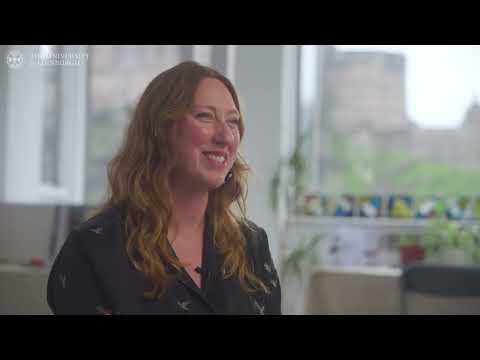
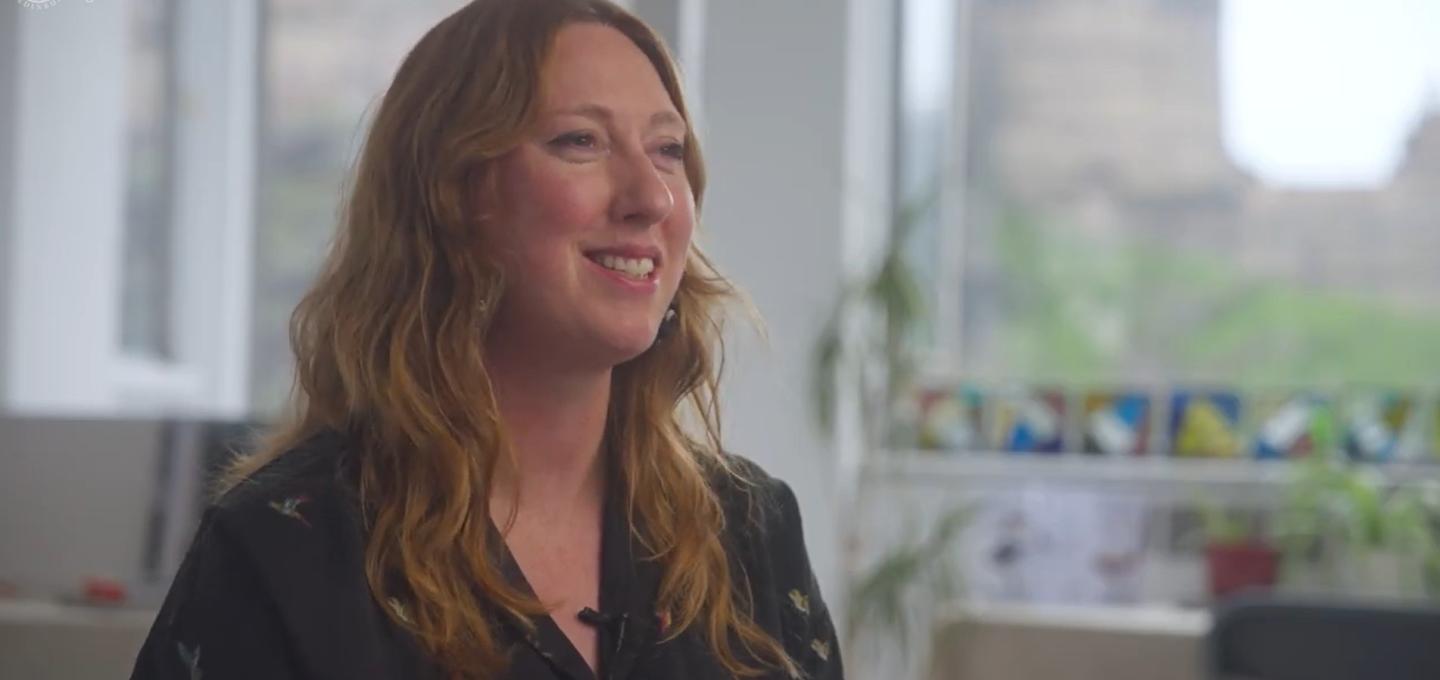
Lecturer Rachel Harkness sits in a classroom to talk about the Design for Change programme.

Careers

The professional knowledge, skills and abilities developed on this programme can be applied across a variety of intellectual and creative contexts.

They will prepare you for a rewarding career as a designer, maker, researcher, strategist or consultant within a variety of public and private sector organisations including:

  • art and design studios and practices
  • museums and galleries
  • government departments
  • non-governmental organisations such as charities, international bodies or research collectives

Moreover, it will prepare you for lifelong learning and help you hone the abilities to critically and carefully navigate the challenges that (co-)designing (and life!) throws at you.

We also encourage you to consider continuing your studies and to perhaps embark on future careers in academia, contributing to emerging fields of inquiry, teaching and using their research-through-design skills.

Similarly, if you are already in this space and are looking for career development, perhaps from within (higher) education, the programme is also very well suited to this, and a good number of our alumni have taken this route.

We regularly invite our alumni back to give talks about and share what they have done since graduating, so you will likely get to meet and hear from them during your time on the programme and benefit from their valuable insights and experiences.

Why you should choose this programme

1

Develop the skills to understand and address complex, real-world challenges and to critically analyse and better understand the circumstances, barriers, processes and phenomena of change.

2

Join a growing field of design that is speaking specifically to the most pressing sociopolitical, economic and environmental issues of our time and be taught by academics at the forefront of this interdisciplinary field.

3

By the time you graduate, you’ll have the skills and expertise to propose, plan and develop critical and creative projects with others, which will demonstrate how change can be fostered, developed and delivered.

4

By actively participating in our discursive studio culture, you’ll develop soft skills in communication, debate, critique and presentation that are widely transferable. Furthermore, as our teaching style blends the theoretical and the practical, you’ll have opportunity, via various means (such as in drawing, making, writing, thinking, speaking) to develop and connect both.

5

Benefit from the programme’s unique position within the city of Edinburgh, and Scotland as a whole, which provide a rich and specific context to the programme. Our students are encouraged to look beyond the classroom and to learn from their surrounding communities, cultures, and natural environments in order to grow as designers and as citizens.

Opportunities

As a Design for Change student, you will gain valuable, transferrable skills. You can also seek out and be supported to develop relationships with community organisations, social enterprises and others who might want to work with you for your final dissertation projects and therefore provide you with the opportunity to collaborate, to situate your work in a real context and experience a ‘live’ project of your own making.  

How to apply and entry requirements

If you'd like to study on a postgraduate programme at Edinburgh College of Art, you must apply through EUCLID, our online application system. You can find out how to do this on the University of Edinburgh website, where you'll also be able to:

  • see detailed entrance requirements for each programme on the Degree Finder
  • get information on what to expect after you apply
  • find out about study modes, start dates and fees
  • find out if, and how, you need to submit a portfolio, showreel or research proposal
  • find out where to go for further advice and guidance.

Read the University of Edinburgh's student terms and conditions


Get in touch

Edinburgh College of Art Postgraduate Admissions

futurestudents@ed.ac.uk
+44 (0)131 650 4086

View the work of our latest graduates

Field trips

In our courses we often move beyond the studio, out into the city and wider surroundings. As a student, you will experience gallery visits and trips to green spaces as well as exercises or workshops that move activity out into the urban realm as these are used pedagogically, in part to emphasise the value of experiential learning.

Design for Change also has occasional field trips which involve us visiting examples of people and places in nearby parts of Scotland that are demonstrating designs/designing for change. 

Whenever we move beyond the studio, we visit to learn in-situ, to get to know one another better, to experience for ourselves, to meet the people involved and to be inspired. During visits we encourage the documenting of experiences and keen engagement with our hosts. Post-visits we invite the sharing of reflections and discuss connections to Design for Change's courses and wider themes. 

Campus facilities

Design for Change is mostly taught and experienced from our design studio, where you are also encouraged to work independently in order to build community with your cohort and help create a vibrant studio culture.

The studio is in the Lauriston campus of ECA, which is in the centre of the city of Edinburgh. Elective course options may be based in other parts of the University’s estate, allowing you to experience and explore further afield.

ECA and the wider University provide a rich array of facilities, and in particular, we encourage our students to take advantage of the University’s outstanding libraries and ECA’s excellent workshops (print, wood, textiles, metal and so on) and maker spaces. This reflects the programme’s strong emphasis on thinking-through-making, research-through-design and the blending of theory and practice.

Lauriston campus redevelopment

ECA are excited to be undertaking a capital redevelopment of ECA’s Lauriston campus.

The project aims to maximise the use of existing space, improve accessibility, and create a vibrant campus that fosters collaboration and innovation.

The project involves refurbishing and repurposing various spaces across the Lauriston campus, including technical facilities, student and teaching spaces, and the relocation of the Reid School of Music from Alison House to the Lauriston campus. New social spaces, seminar rooms, and studios are being created to accommodate our growing community.

You can find more about the project at the below link:

Building work starts at ECA’s Lauriston campus | Edinburgh College of Art

Scholarships and bursaries

See all Scholarships and bursaries

Our alumni

Meet our staff