
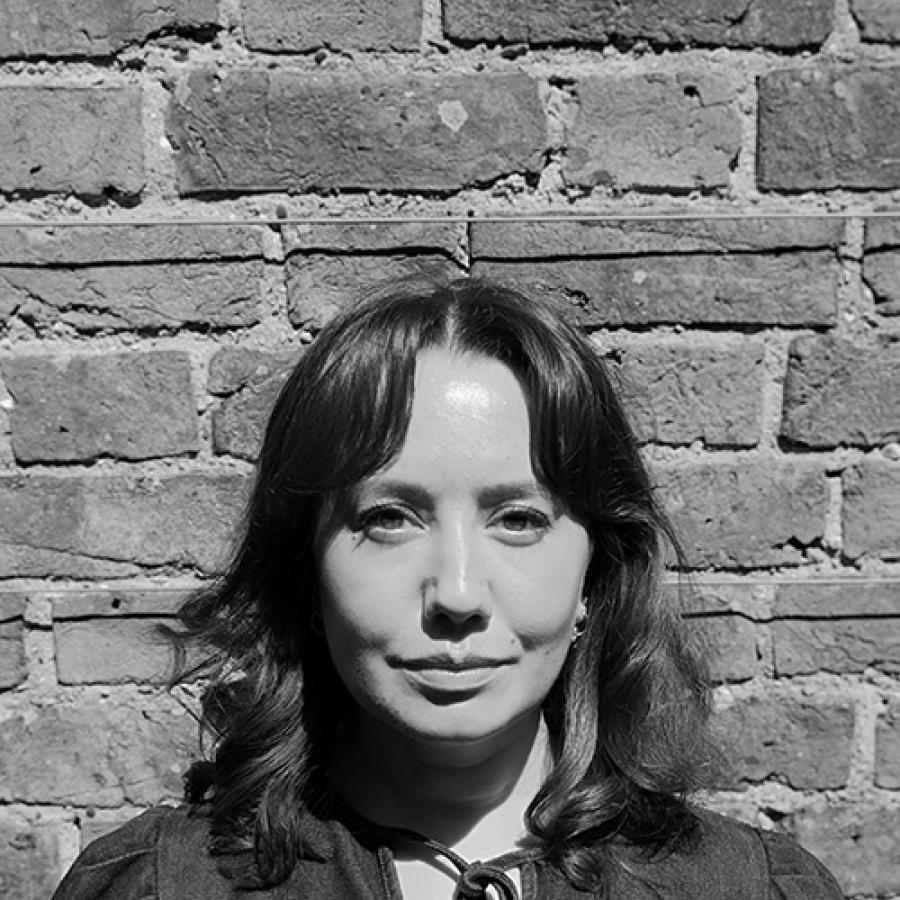
Dr Hannah Halliwell
Job title:
Lecturer in Nineteenth-Century French Art
Role:
Course Organiser for Research: Theories and Methods and The Cultures and Politics of Display
Office:
Hunter Building, O.45
Biography
I am a lecturer in nineteenth-century French art history. My research focuses on gender and the body, visualisations of addiction and alcohol/drug use, and the relationship between visual culture and the medical sector. I am interested in all art styles and mediums in nineteenth-century French art, including Impressionism, “post”-Impressionism, the Salon, and print works such as caricature. I have presented my research to public and academic audiences around the world - across the UK, in the USA and in China.
My monograph "Art, Medicine, and Femininity: Visualising the Morphine Addict in Paris, 1870-1914" was published in 2024 with McGill-Queen's University Press. It has since been reviewed in numerous journals, including the "Social History of Alcohol and Drugs", "Histoire, médecine, santé", "British Journal for the History of Science", and "French History." I published the "Historical Dictionary of Impressionism", co-authored with Professor France Fowle, in August 2026 with Bloomsbury. My ongoing and future research continues to explore bodies, addiction, recreational and medical drug use, and feminism. My two current research areas relate to café culture and anaesthesia.
I am an Associate Fellow of the Royal Historical Society and a Fellow of the Higher Education Academy (FHEA). I have held the position of Reviews Editor for the "Social History of Alcohol and Drugs" journal (University of Chicago Press) since 2024. I was an affiliate fellow at the University of Edinburgh's IASH (Institude for the Advanced Studies of the Humanities) between 2024 and 2026.
I have worked previously as a lecturer in art history and visual culture at the University of Exeter and held art history teaching fellow positions here at ECA at the University of Edinburgh and the University of Birmingham. I graduated with a PhD in Art History in 2021 from the University of Birmingham. My PhD was funded by Midlands4Cities (AHRC DTP) and the Haywood Fellowship.
Research interests
- Nineteenth-Century France
- Impressionism
- The Body/Nude
- Medical Visual Culture
- Drugs and Addiction
My current courses at the University of Edinburgh are: the postgraduate special option course "Impressionism and the Third Republic: Culture, Politics and Social Change, 1865-1900", the senior honours special option "Avant-Gardes and Individuals: Art in France, 1886-1900", and the junior honours special option "Bodies of Change: Medicine, Sexuality, and Gender in France, 1852-1914". I lecture on a range of topics for the second-year course "History of Art 2A: Reason, Romance, Revolution: Art from 1700 to 1900", including Édouard Manet, the French Revolution(s), Impressionism, "Post-"Impressionism and Social Art History.
I am currently the course organiser for the postgraduate core courses "Research: Theories and Methods" (semester 1) and "The Cultures and Politics of Display" (semester 2) for the two MSc programmes, "History of Art, Theory and Display" and "Modern and Contemporary Art".
I supervise undergraduate and postgraduate dissertations, Analysing Art History projects, and PhD students.
Research
Research
My research centres on mid- to late-nineteenth-century French visual culture. I am particularly interested in representations of the female body and/or sexuality, the overlaps between visual culture and medicine, and the representations of alcohol/drug use and addiction. My first monograph brings together these three interests; "Art, Medicine, and Femininity: Visualising the Morphine Addict in Paris, 1870-1914" came out in January 2024 with McGill-Queen's University Press. The book links the feminisation of addiction to broader anxieties in late nineteenth-century France - the defeat by Prussia in 1871, concerns about social decadence, a declining population, and a rising feminist movement. It presents a new understanding of the history of addiction and substance use and its intersection with art and gender.
The Impressionist movement is always of particular interest to my research. My "Historical Dictionary of Impressionism", co-authored with Professor Frances Fowle, came out in August 2026 with Bloomsbury. The dictionary section comprises cross-referenced entries on the French Impressionists, the locations they worked in (both in France and further afield), their predecessors and followers, and their models, critics and dealers.
My research considers an array of mediums, including oil paintings, lithographs, caricatures, and sculpture, and art styles. I focus on the function, impact, and effect of art and visual culture in relation to socio-political events in France and further afield.
Talks I have given in the last 2 years include: "Anaesthesia in Nineteenth-Century Art" for the UK Society for Anaesthetists, London (2026); "Advertising Absinthe: French Posters at the Fin-de-Siecle" at the Alcohol and Drugs History Society conference, University of Sorbonne (2026); "Solo and Sociable Drinking in Fin-de-Siecle French Art" at the Women and Alcohol conference, University College Dublin (2025); "Absinthe and Art in Late Nineteenth-Century France" at the Drinking Studies Network online seminar series (2025); "Morphine, Medicine and Masculinity in French Visual and Material Culture, 1870-1914" at a Language and History of Medicine collaborative seminar, University of Warwick (2025); "Degas, Absinthe and the Café" at the Degas Symposium, Burrell Collection, Glasgow (2024); "The Pipe and the Syringe" at International Nineteenth-Century Studies Association, Durham (2024); "The Visual and Material Culture of Opiate Paraphernalia in Nineteenth-Century France" at ADHS, Buffalo NY (2024).
PhD Supervision Topics
- French art
- Nineteenth century
- Impressionism
- Medical visual culture
- The nude
- Bodies
- Addiction
- Drugs and alcohol
- Café culture
- Prostitution
- Fashion and consumerism
- Advertising
- Third Republic
- Gender and identity
- Sexuality