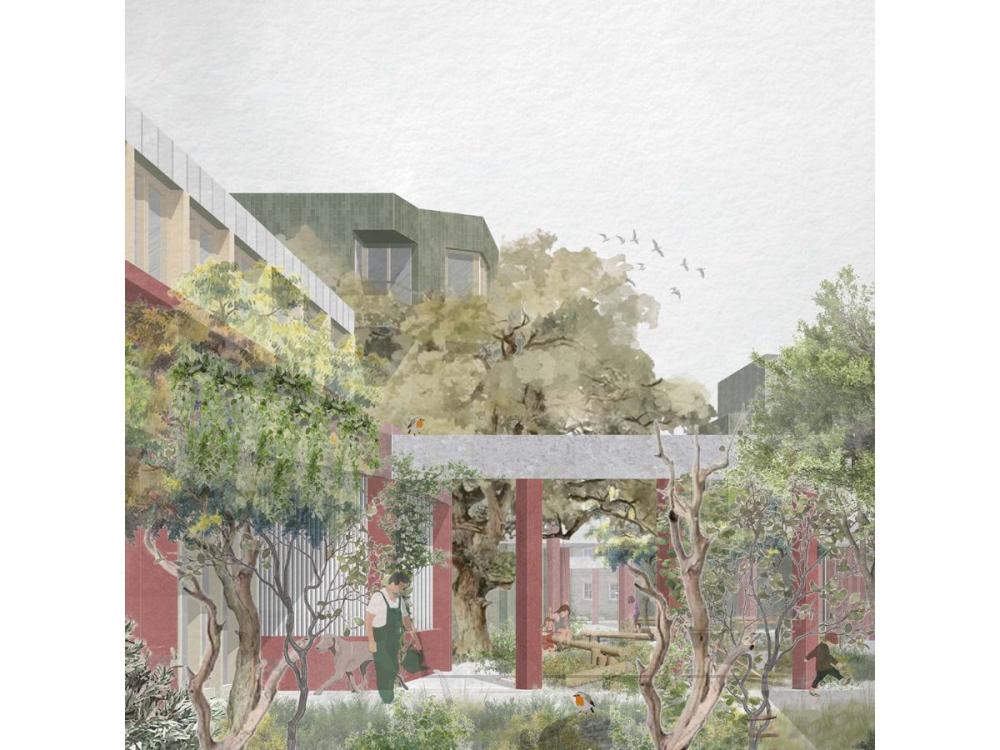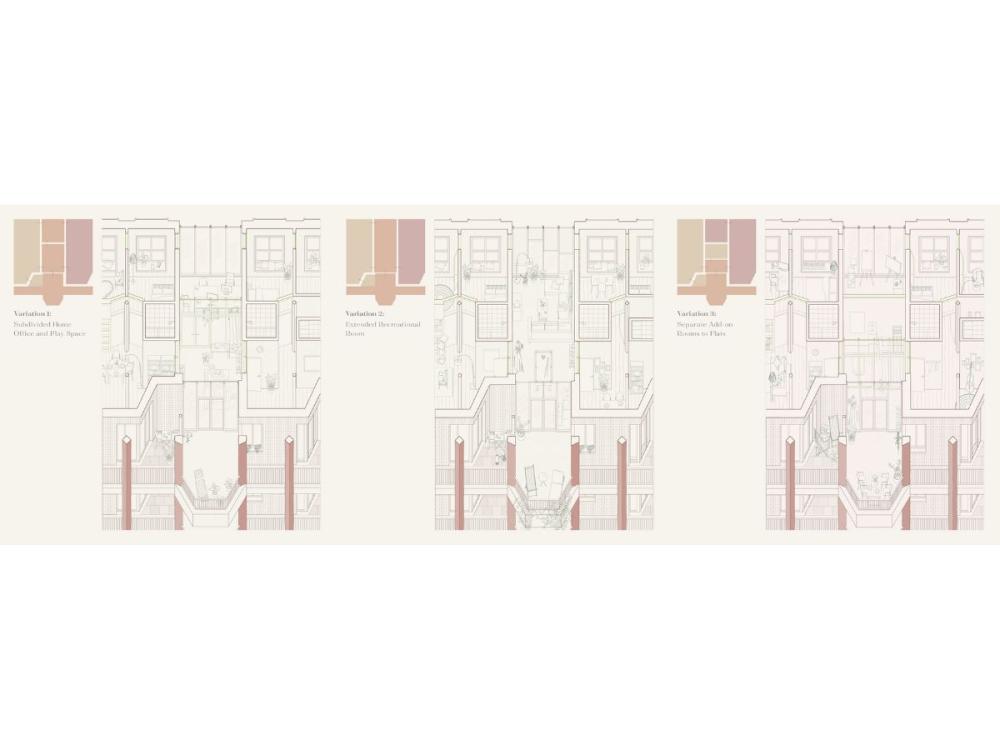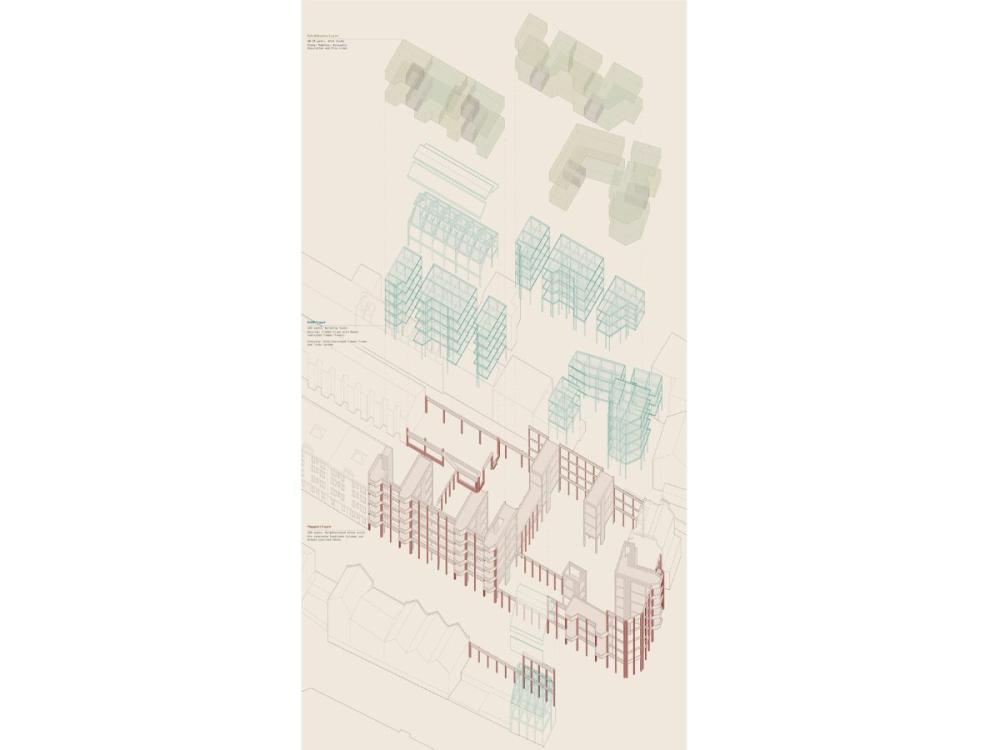

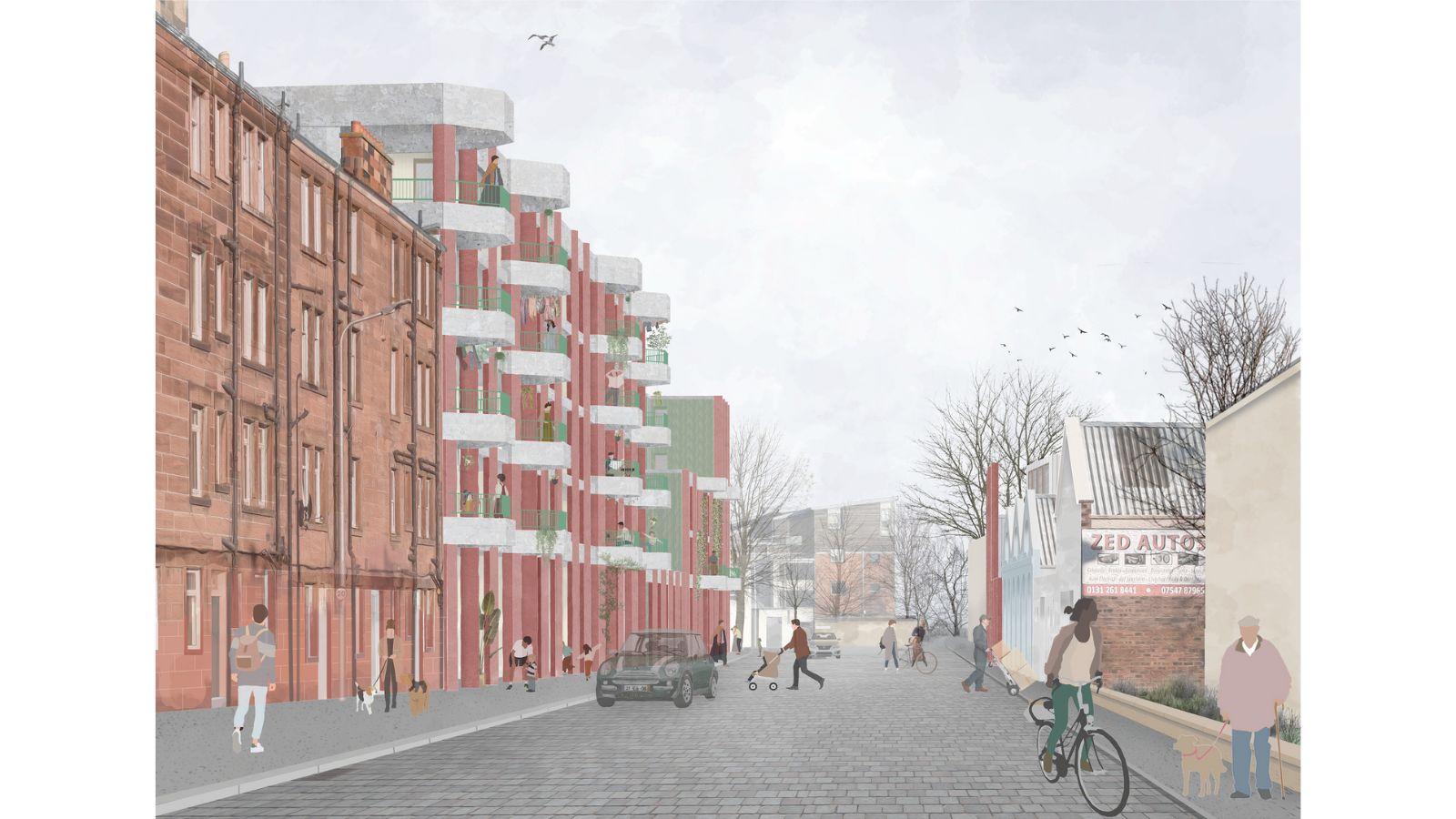
Inka Eismar (MArch 2025), has won a prestigious RIBA Silver Medal Commendation for her project, Room to Grow – a layered residential, industrial and garden scheme located in a former industrial estate near the Water of Leith.
Inka said the project grew from her eagerness to investigate how homes can serve people, beyond simply providing shelter, helping support the formation of communities.
She said: “It is a widespread stereotype that public housing must in nature be hostile and restrictive, and many existing housing estates from the 1960s and 70s have gained unfavourable reputations. However, there were actually Modernist architects who considered how large-scale housing developments could be designed to integrate an inherent degree of flexibility and opportunity for growth alongside residents.
“Inspired by the writings of John Habraken, my thesis project aims to rethink the idea that public housing must consist of rigid, minimal spaces. Instead, I explored how its shared character can challenge conventional boundaries between public and private domains and encourage residents to claim space in accordance with current need, following a model that reframes ownership as a matter of agency rather than possession.”
She said she was incredibly honoured by the RIBA recognition, given as part of the President’s Medal scheme: “It is impressive to see the breadth and variety of student projects awarded, all of which take really inventive, well-researched, and sometimes personal stances on current issues, so I am delighted that my project was noted among these. I am of course also hugely grateful to my tutors, Kieran Hawkins and Darren Park, who continually challenged me to develop and clarify my ideas, and have supported me throughout the last year of my studies.”
Inka is now working at an architectural practice in Edinburgh, and said her time at ESALA really helped her develop her practice: “The MArch programme at ESALA offers a flexible framework, within which students can pursue individual lines of enquiry, weaving together design with concerns around technology, theory and professional practice. My final thesis project wasn’t developed in isolation, but strongly informed by architectural writers I learned about in the theory module, and inspired by conversations I had with practitioners as part of the management course, where I learnt about the realities of community-centred design.
“The programme taught me to approach architectural practice from an interdisciplinary point of view, with curiosity, and keeping an open mind to unexpected sources of inspiration.”