A student is working at a jewellery bench surrounded by tools and equipment. They are working on a small metal object in their hands and looking at it intently.

Edinburgh College of Art (ECA) has introduced a new postgraduate programme which will allow students to do a deep dive into craft-related subjects.

The new MA Craft will start in September 2025 and will combine hands-on making experience with advanced study in related theory and conceptual reasoning.

It will be taught by a number of academics who are currently teaching and undertaking research at ECA in the fields of ceramics, glass, textiles, jewellery and silversmithing.

In this article, we profile a few of the programme’s staff to give applicants an insight on who will form the core of the programme team.

Dr Jessamy Kelly, MA Craft Programme Director

Jessamy is ECA’s Head of Design and a practising artist in glass.

Do you have work in any well-known collections or museums?

Yes – quite a few collections!

  • Ajeto Art Glass Museum, International Glass Symposium, Nový Bor, Czech Republic
  • Harbin Museum, Harbin, China
  • Rona Glass Museum, International Glass Symposium, Lednické Rovne, Slovakia
  • Museum of Edinburgh, Edinburgh
  • Museum of Glass, Kamenický Šenov, Czech Republic
  • National Museum of Scotland, Edinburgh
  • The Finnish Glass Museum, Finland
  • The Murano Glass Museum, Italy

Could you tell us about one or two of your favourite or most important pieces?

I was selected to take part in the European Glass Experience, at the Finnish Glass Museum, in Riihimäki Finland. 

This was a European Union-funded initiative, aimed at showcasing and promote glass art across Europe. 

The work that was acquired by this museum was a piece of cobalt blue kiln cast glass which has been mixed with a ceramic aggregate. The artwork was made during my PhD studies and it is now housed in the Finnish Glass Museum. 

The work was a landmark moment in my creative practice as it shows the successful combination of glass and ceramics, two materials which don’t usually mix well together due to material compatibility issues, I managed to make them work by matching the co-efficient of expansion between the two materials. It took a lot of trial and error to successfully make this final piece of work but despite several failures in the initial making process, this piece was an important achievement in my creative practice and I was so proud to have it included in an international glass museum. 

What’s your favourite part of teaching and what are your hopes for the new programme? 

My favourite part of teaching is when we get to the midpoint review and the students are halfway through their term. 

A lot has been learnt but there is so much more to come. There’s a shift at this point, when students get to share their work, get feedback and see the work of others. It is a really exciting point.  

Do you undertake research in your role at ECA and will this fit with the programme? If so, how?

My research is closely linked to the new programme as my research is focused on craft and materiality, I am very interested in the intersection between new digital technologies and handmade craft processes. 

Through my creative practice I am especially interested in the material qualities of glass and its ability to imitate or be mixed with other materials such as ceramics. 

I am excited to share my practice-based research approach with students on the MA Craft programme and to introduce them to the infinite creative possibilities that creative craft practice can lead to.

Find out more about Jessamy on her profile page

A slice of cobalt-coloured glass sits on a white background.

'Spliced Cobalt Cast Glass' by Jessamy Kelly

"The work that was acquired by this museum was a piece of cobalt blue kiln cast glass which has been mixed with a ceramic aggregate. The artwork was made during my PhD studies and it is now housed in the Finnish Glass Museum."

View Jessamy's profile on our website

Dr Maria Maclennan, Senior Lecturer in Jewellery and Silversmithing

Dr Maria Maclennan is an award-winning interdisciplinary designer, researcher, educator, and TEDx Speaker.

Describe your work for us

Although I trained as both a craft practitioner and designer originally (namely, in jewellery and silversmithing, service design, and forensic art), the nature of my practice over the past 15 years has departed from ‘making’ in the traditional sense, into innovative research-based practice. 

My work as the world’s first ‘Forensic Jeweller’ instead follows the trail from jewellery to justice.

As such, I work less with museums and galleries, and primarily with law enforcement and investigative agencies across the globe.

Outcomes from my research have taken many forms, and have been showcased internationally: in the UK, USA, Ireland, Netherlands, Finland, Hungary, Germany, Greece, Brazil, Australia, Canada, and South Africa; including outputs developed for INTERPOL, National Crime Agency, Home Office, College of Policing, Police Scotland, the Brazilian Federal Police, and the Transnational Platform for Forensic Assistance.

What’s your favourite part of teaching and what are your hopes for the new programme?

My teaching is highly interdisciplinary and always research-informed. 

My favourite part of teaching is the disciplinary breadth of the programmes and student body that I contribute to including jewellery and silversmithing, product design, speculative design, and service design; in addition to (outside of the University of Edinburgh), forensics, criminology, and policing studies.

Do you undertake research in your role at ECA and will this fit with the programme? If so, how?

I both teach and research at ECA and the Edinburgh Futures Institute [another school within the University] and ensure wherever possible that my teaching is research-informed. I’m currently Principal Investigator on ‘Identifying the Displaced’, an international investigation into the forensic value of personal effects in the migration context (2021-present). I’m also Co-Investigator on two further interlinking multidisciplinary UKRI grants totalling £1.2 million.

My research is focused on knowledge exchange and impact, and I would love to bring elements of this into the MA Craft programme. I am particularly passionate about public engagement; I am a regular contributor on national television and radio, with my work having been the subject of major profiles by The New York Times, The Financial Times, The Times, BBC World Service, and Ripley's 'Believe It Or Not’.

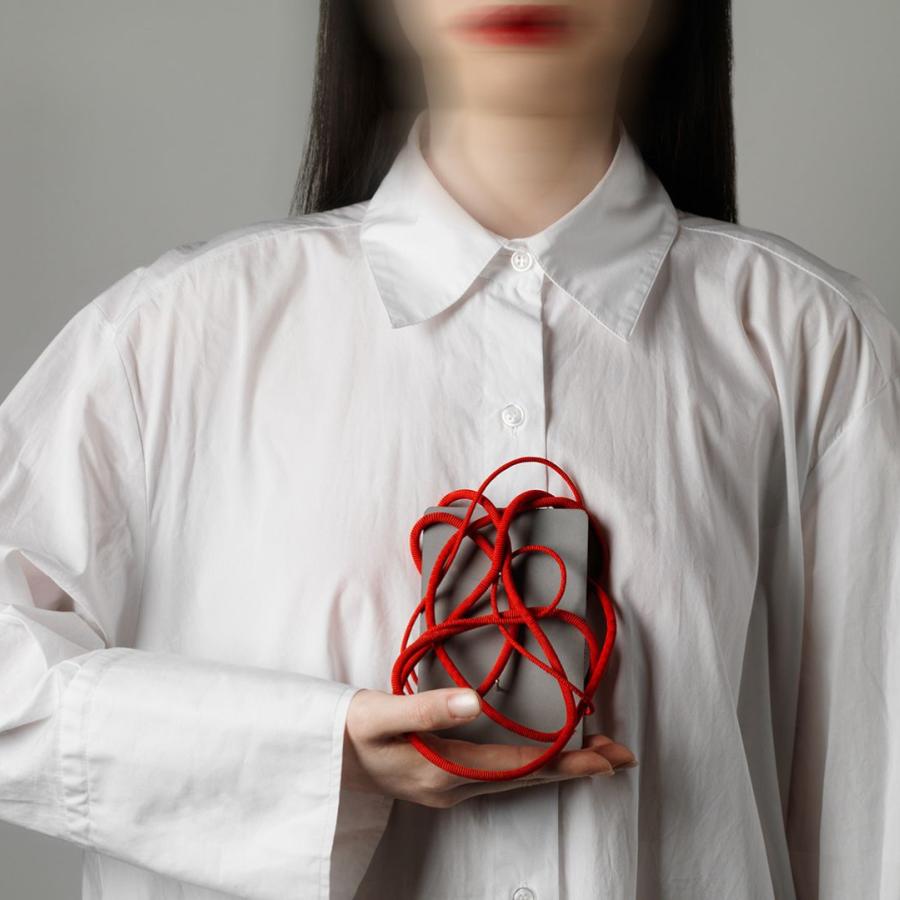
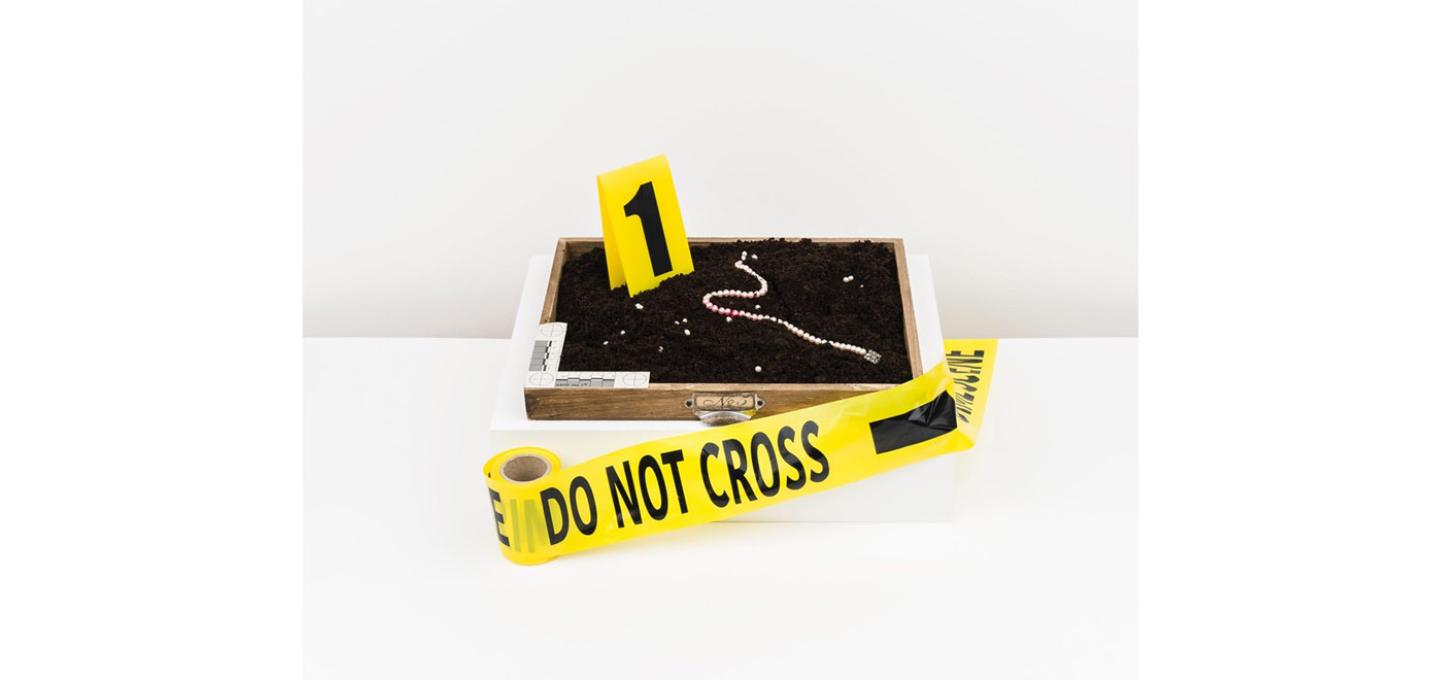
Work by Maria Maclennan

'Specimen 1 (2022)' by Maria Maclennan

"Forensic Art and Facial Imaging represents a new and expanded element of my practice, in addition to a whole plenthora of possibilties for art, craft, and design in the somewhat traditionally-polarised disciplines of forensics, crime, policing, and archaeology. The techniques employed in Forensic Art take the principles that underpin creative disciplines (e.g., photography, sculpture, drawing, painting, making, digital arts) and explore the possibilties, application, and value when applied in scientific contexts."

View Maria's profile on our website

Choi Keeryong

Choi is a glass artist who uses traditional materials combined with digital fabrication techniques. He is a Teaching Fellow in Contemporary Craft at ECA.

Do you have work in any well-known collections or museums?

I have work in many different collections in the UK and abroad.

  • Ruskin Glass Centre, Stourbridge, UK
  • Imagine Museum, St. Petersburg, USA
  • Corning Museum of Glass, Corning, USA
  • City of Edinburgh Council - Museums and Galleries Edinburgh, Edinburgh, UK
  • Gallery Sklo, Seoul, South Korea
  • National Museum of Scotland, Edinburgh, UK
  • The National Glass Centre, Sunderland, UK
  • The Oriental Museum, Durham, UK

If so, could you choose one or two of your favourite/most important pieces?

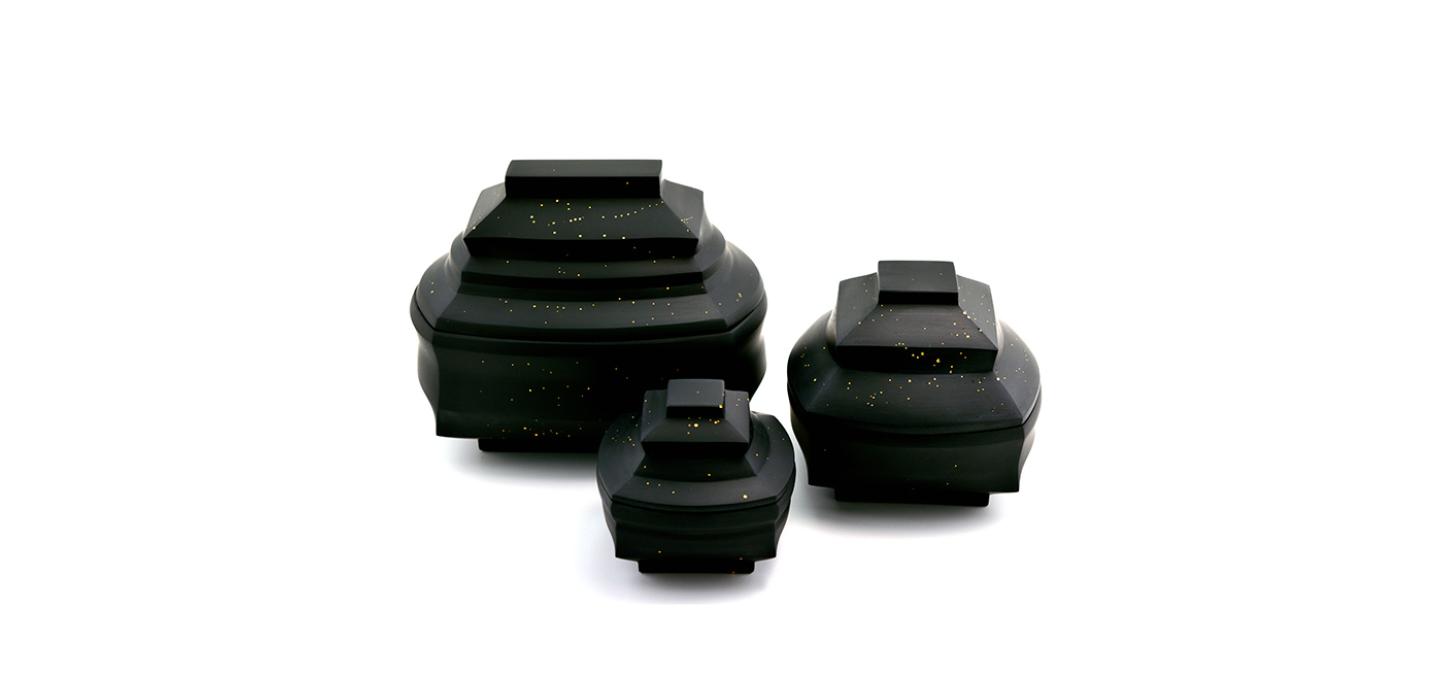
My glass pieces ‘Daam Dah 1, 2, and 4’ are part of the permanent collection at the Corning Museum of Glass in Corning, USA. These lidded vessels are made from opaque black glass with speckled 23.5ct gold-leaf inlay. Created in 2018, they were acquired by the museum in 2019. 

This collection marks the beginning of my exploration with digital fabrication technologies, including 3D printing and CNC routing, which I integrated into my work for the first time.

What’s your favourite part of teaching and what are your hopes for the new programme?

My favourite part of teaching (on the courses that involves [craft] making and thinking through making) is the opportunity to guide students through the process of discovering and developing their own unique creative voices. 

I love seeing how they experiment with new tools and materials, whether that’s exploring the possibilities of digital fabrication or reinterpreting traditional craft techniques in fresh, innovative ways. It’s incredibly rewarding to watch students push beyond their comfort zones, blending disciplines (or materials and processes), and finding new ways to express their ideas. 

Who is the new programme aimed at?

This MA Craft programme is ideal for anyone who is passionate about exploring the evolving world of contemporary craft and are eager to experiment with new technologies, materials, and techniques. It is designed for those who want to expand their creative horizons beyond traditional craft boundaries (and engage with innovative approaches, such as digital fabrication), while still honouring the value of craftsmanship.

Daandah by Choi Keeryong

'Daamdah' by Choi Keeryong

"My glass pieces ‘Daam Dah 1, 2, and 4’ are part of the permanent collection at the Corning Museum of Glass in Corning, USA. These lidded vessels are made from opaque black glass with speckled 23.5ct gold-leaf inlay."

View Choi's profile on our website

Jennifer Gray

Jennifer Gray is a lecturer and programme director of ECA’s undergraduate programme in Jewellery and Smithing. As an award-winning designer-maker, Jennifer’s work is informed by deep historical research of materials, techniques and social contexts.

She has been involved with projects at the National Museums of Scotland and the Sir John Soane Museum, London, among others.  She exhibits her work nationally and internationally and often works to commission or on a project basis with organisations such as Bauhaus, St James’ Palace and UNESCO.

What’s your favourite part of teaching and what are your hopes for the new programme?

I most enjoy bringing together ideas and practice through my teaching.  There is nothing more rewarding than supporting a student to realise their own ideas and inspirations through material and form.   

I hope the programme will become a creative incubator for the highest standards of applied making where students from a diverse range of disciplines can work together to develop their practices and forge new pathways into industry. 

Do you do research in your role at ECA and will this fit with the programme? If so, how?

My research involves making and using a variety of materials and methods to create forms that carry stories and meanings. I use methods such as creative speculation to give form to ideas and fragmented archival evidence.

Who is the programme aimed at?

Practitioners, designers and makers form a range of different disciplines such as jewellery, silversmithing, textiles, glass and ceramics.

MA Craft students will be building from their existing knowledge of materials and making and challenged to consider and integrate further technologies and methods - both practical/analogue and digital - supported in the ECA studios.  They will work together and with ECA staff and expert technicians to realise their projects and consider application into industry.

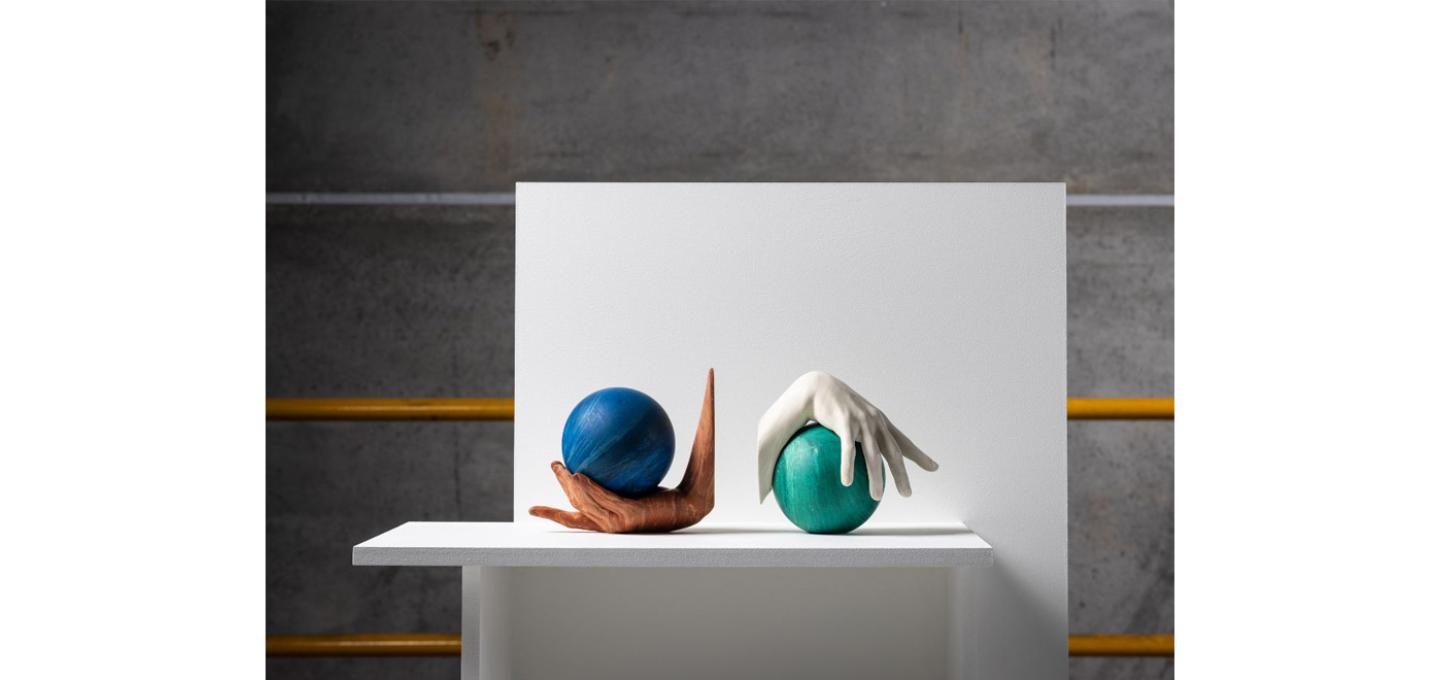
World at her fingertips by Jennifer Gray for the Dundee Design Festival

'World at her Fingertips' by Jennifer Gray

Jennifer's most recent project is a pair of bookends designed for Dundee Design Festival 2024, a UNESCO City of Design Dundee project. She took cast of the dominant/writing hand of current female journalists based in Scotland as a way of continuing/connecting themes around design, culture and feminism.

View Jennifer's profile on our website

Related programmes

Meet our staff