Programme director for ECA’s MA Illustration, Amy Dover, has explored the hidden lives of the bats living in Seaton Delaval Hall, Northumberland, with a solo exhibition.
The Secret Bats of Seaton Delaval Hall was a partnership with the National Trust, which owns the 18th century grand house. Seaton Delaval is home to the largest hibernation roost of common pipistrelle bats in the UK. The bats at the hall hibernate in stone crevices and balcony arches, and Amy worked with bat ecologists from Northumberland Bat Group, undergoing specialist bat training. She combined her direct observation of wild bats with study of specimens held in The National Museums of Scotland’s collections.
Installation
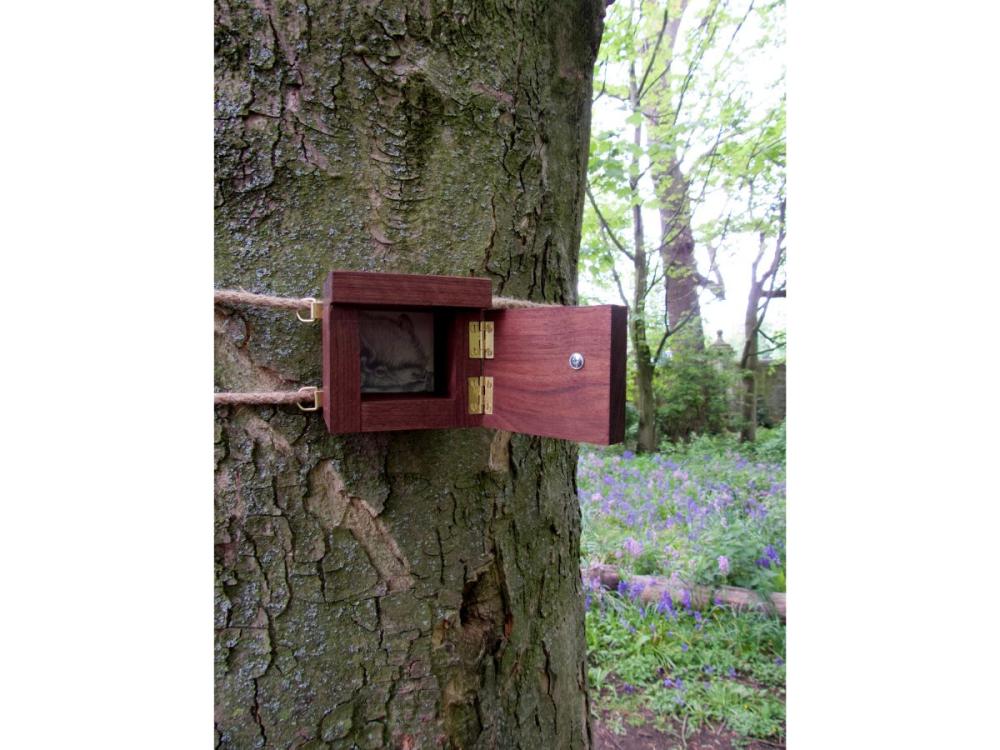
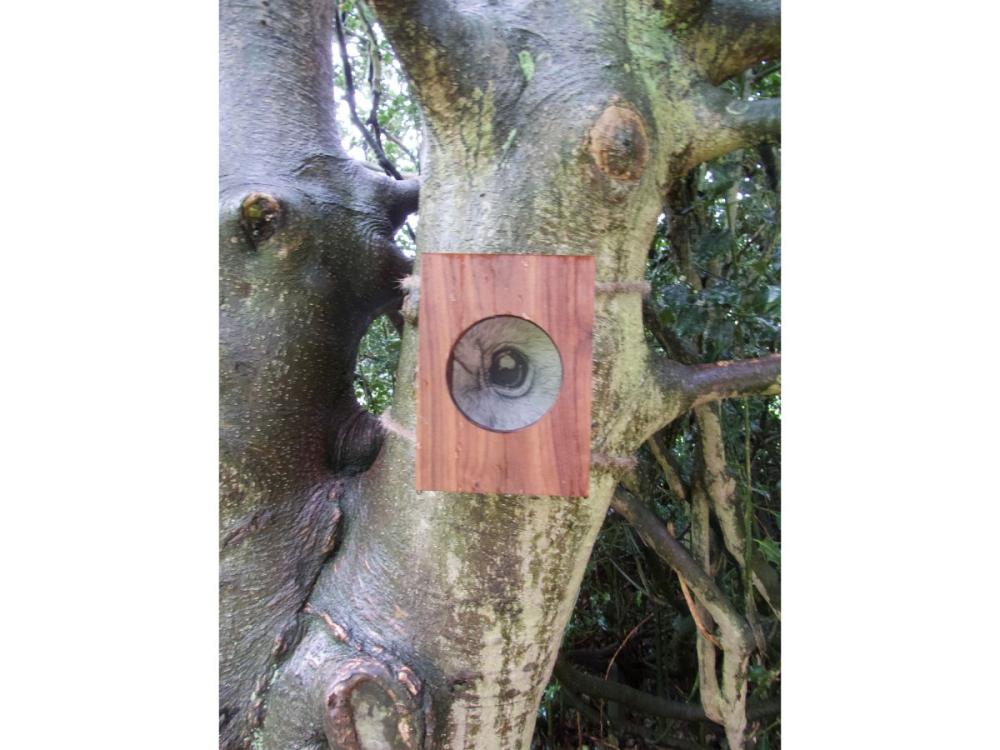
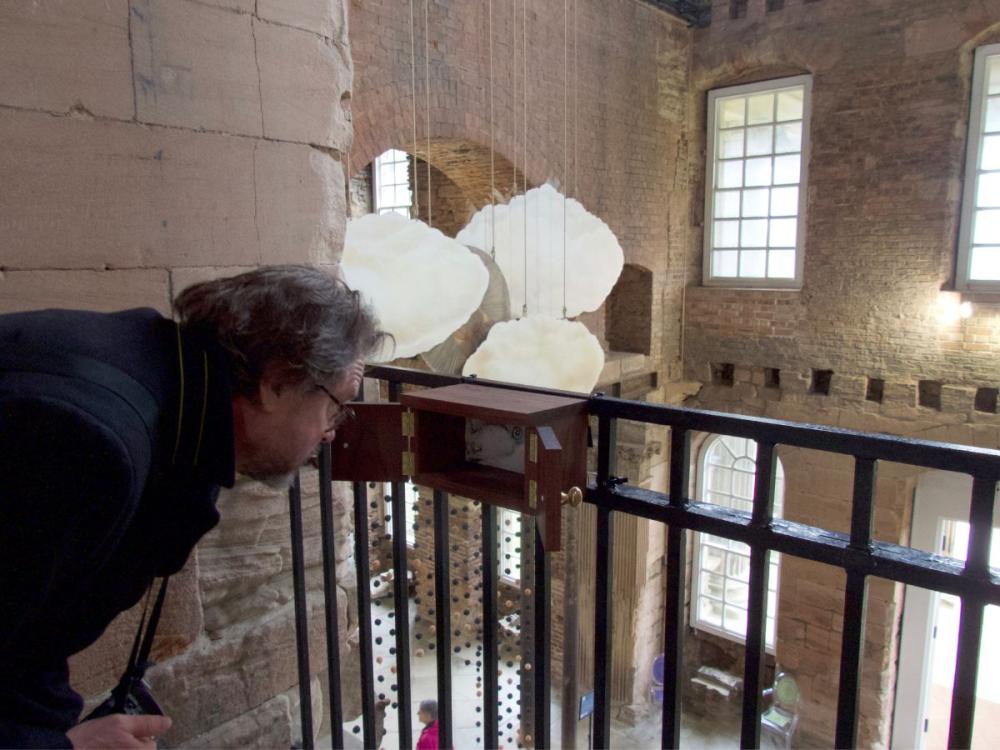
Amy riso-printed a hand-made illustrated trail map onto plantable seed paper, guiding visitors towards a series of specially designed sculptural wooden boxes dispersed throughout the historic building, gardens and woodland.
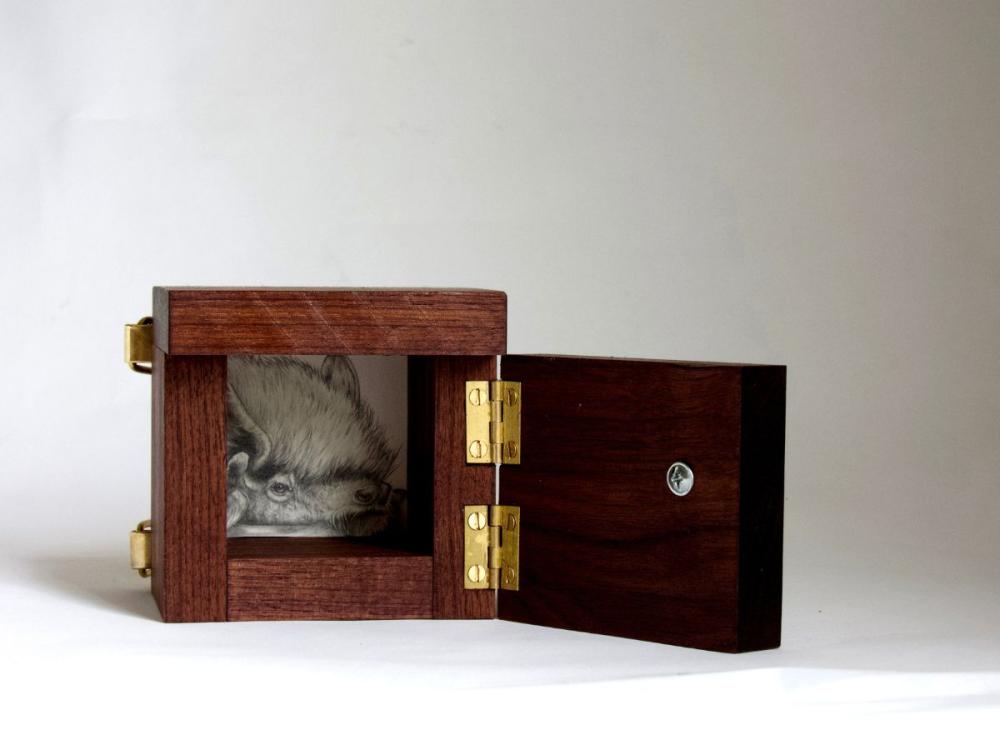
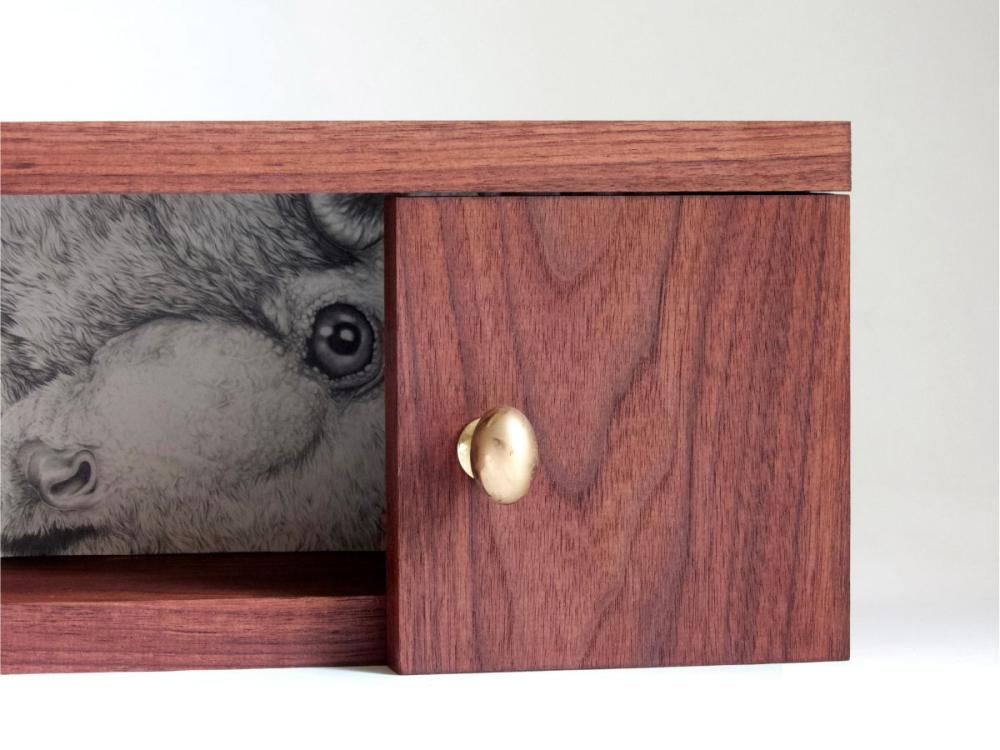
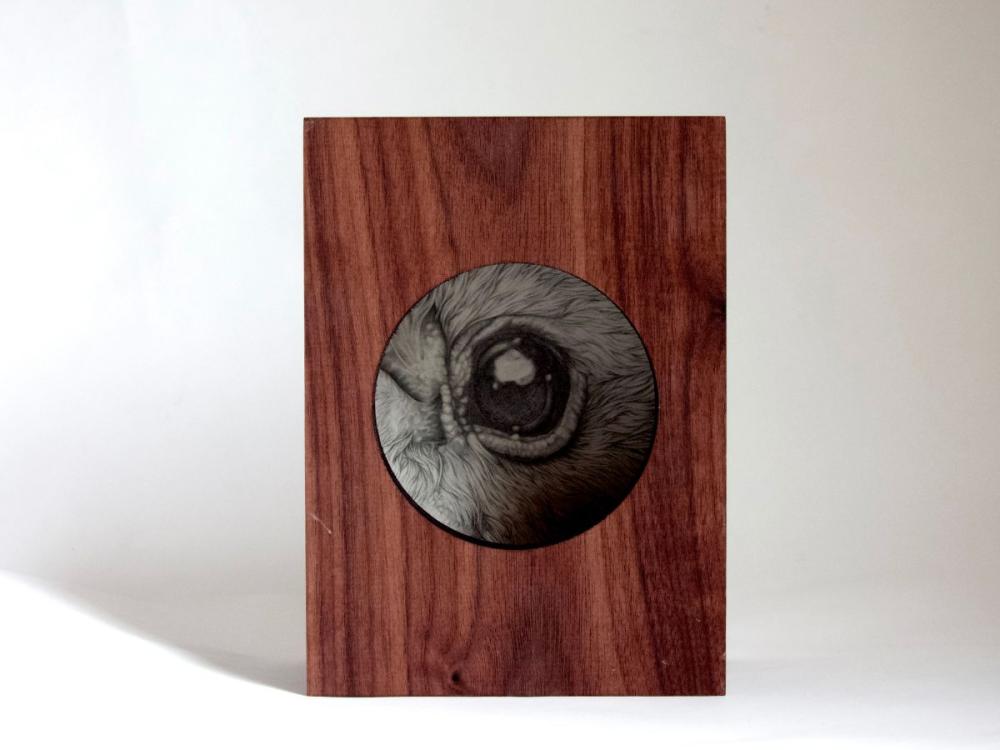
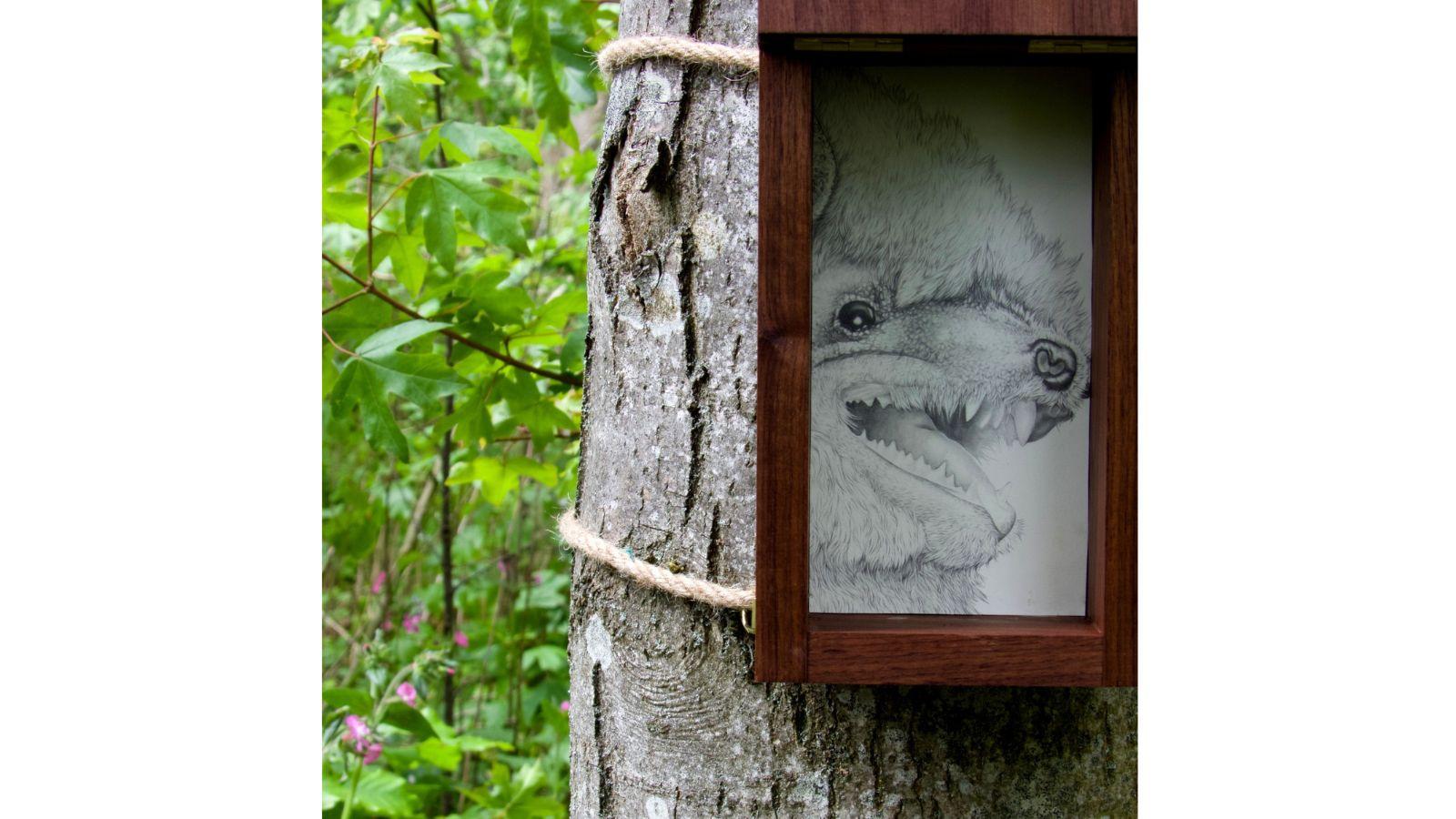
Constructed at ECA, and made from walnut, cotton paper and brass, the boxes incorporated concealed original drawings based on individual bats associated with the Hall. Visitors could discover the portraits by looking through peepholes or opening doors, creating intimate encounters between the visitor and the animal represented.
The works explored bats as individual animals, rather than anonymous representations of a species, paying particular attention to their facial features and the moments in which they appeared to look directly back at the viewer. This reciprocal gaze became an important visual device throughout the exhibition, positioning the bat as an active subject rather than simply an object of observation.
Disappearing into the Darkness
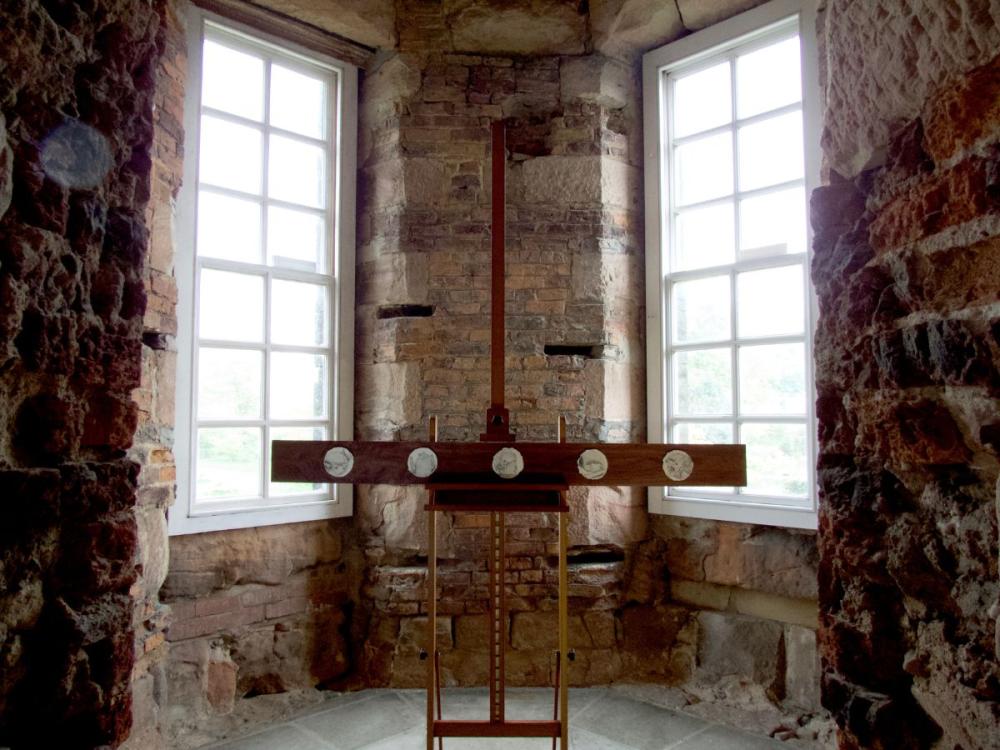
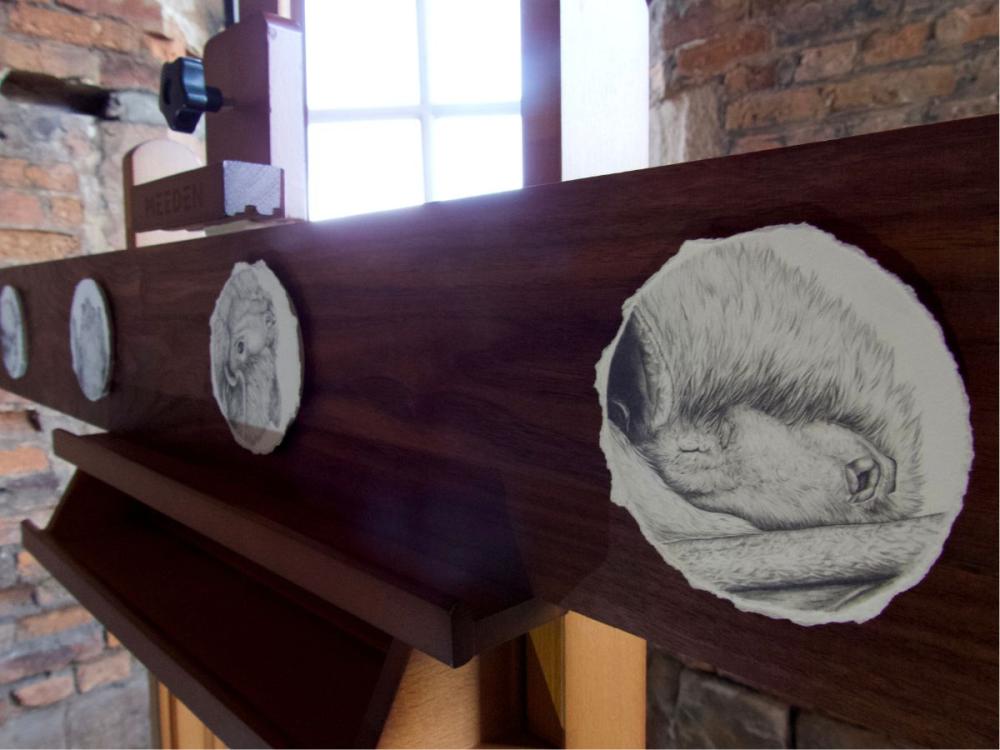
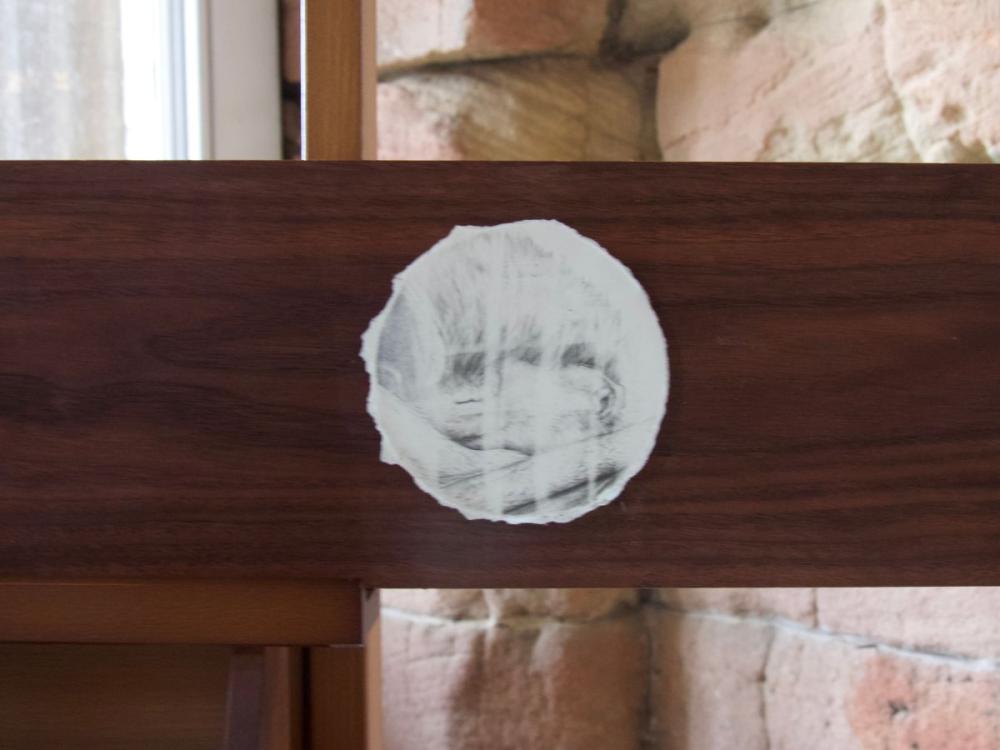
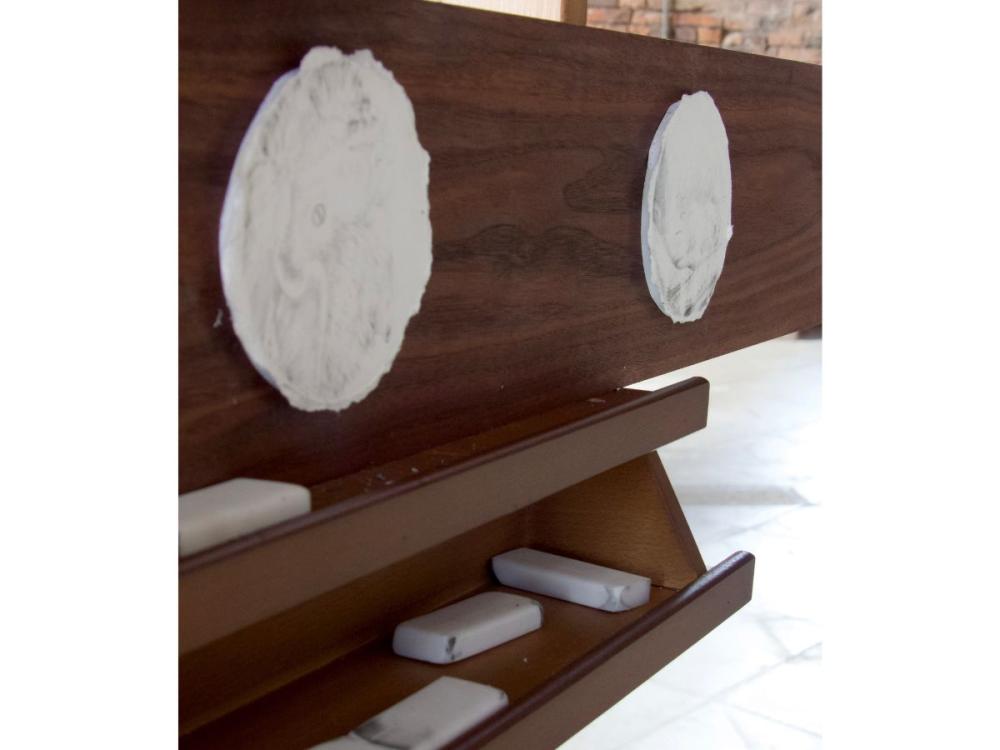
The exhibition culminated with a participatory installation called Disappearing into the Darkness, consisting of graphite portraits of individual bats mounted onto a long walnut structure. Over the course of seven days, visitors were invited to erase the drawings, removing as little or as much of the bats as they wished.
The repeated acts of erasure progressively transformed the portraits, leaving fragments, traces and ghostly remnants. The altered work was subsequently displayed as a record of the collective actions that had taken place.
Amy said the work had been well-received by the hundreds of visitors who experienced it: “I was there for the opening and spoke to visitors about the work, and the feedback was very positive. It generated lots of conversation. They also got to take the maps home with them and plant them, to help biodiversity - which benefits bats as well as other creatures like bees. As it was interactive, it seems children engaged really well.”
The work took place as part of Seaton Delaval Hall’s Blossom festival in May and June.