
Victoria Clare Bernie, Lecturer in Architectural Design, has won first place in the 2026 Derwent Art Prize, scooping the £4,000 top award.
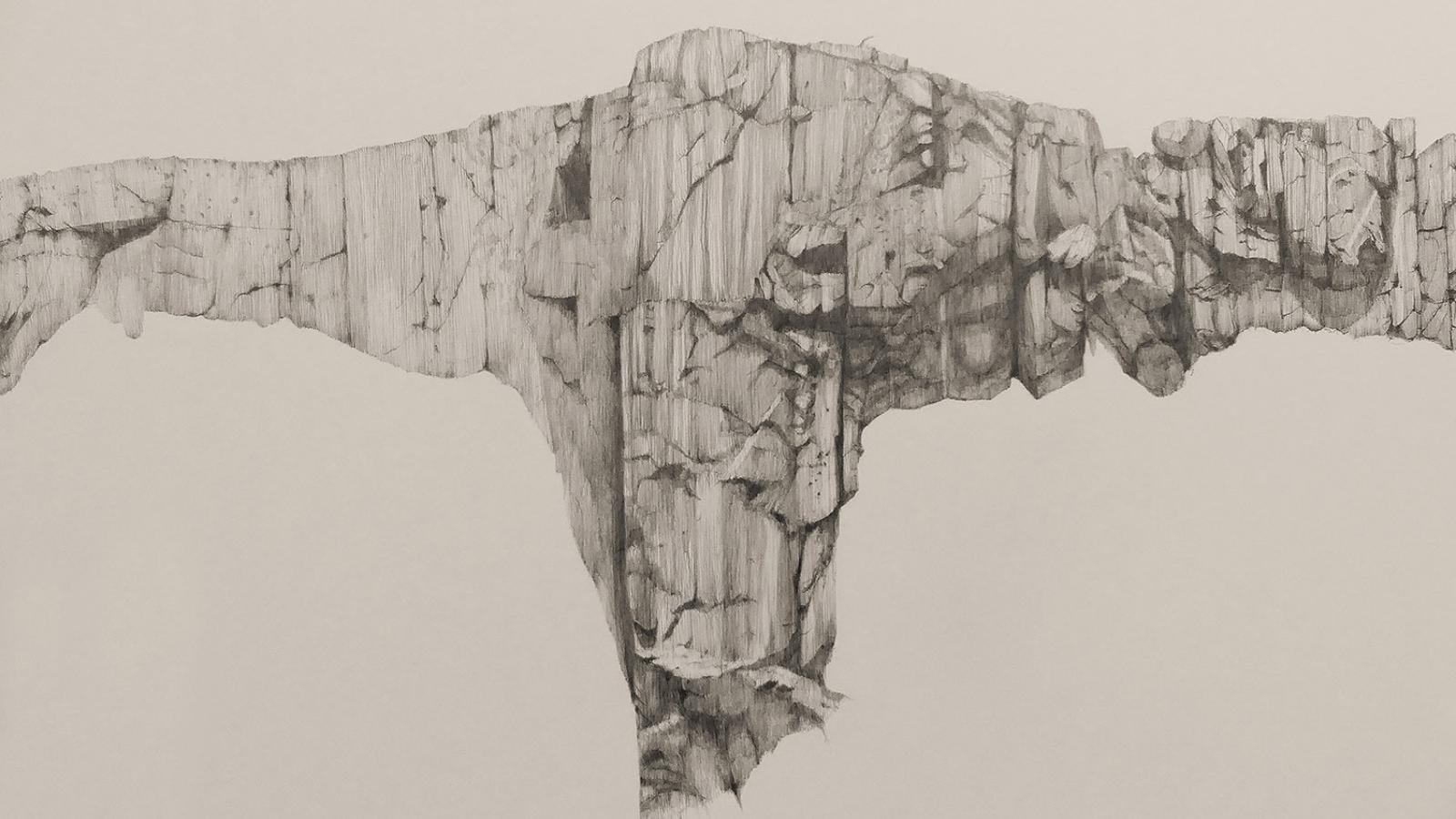
Her winning artwork is called The Minotaur, Camas Tuath, and completed in graphite pencil on paper. It measures 156 x 86cm.
Created in 2012 by Derwent, the Derwent Art Prize rewards excellence by showcasing the very best artworks made in pencil by artists from around the world.
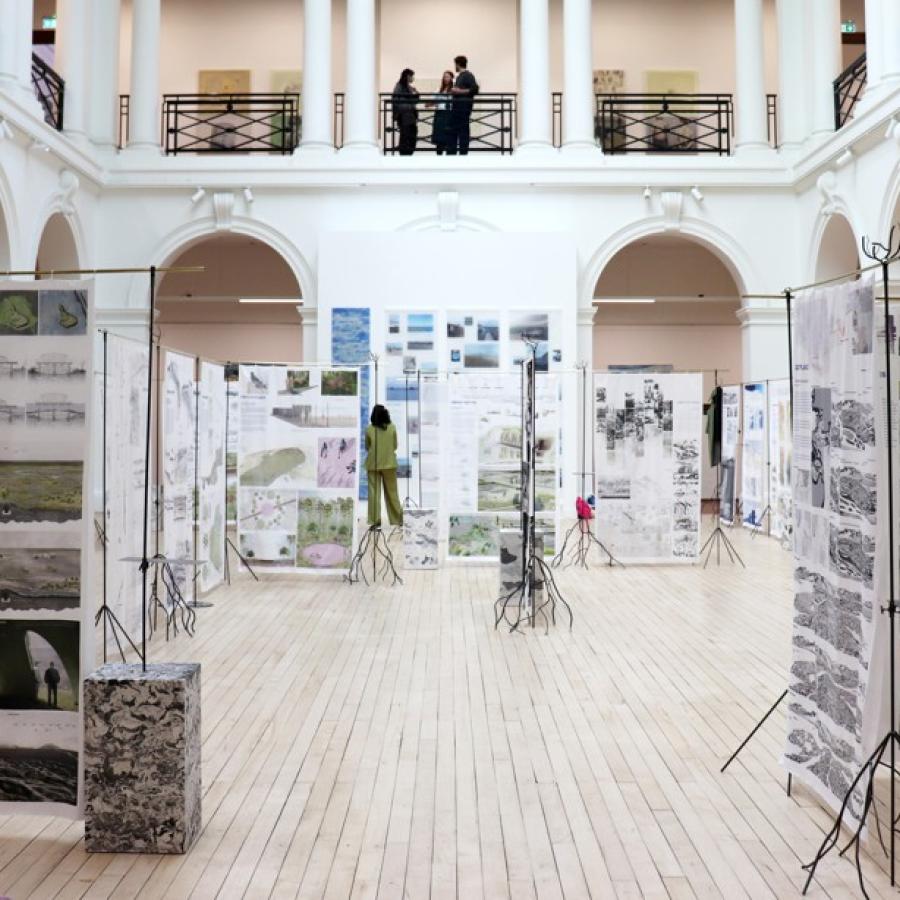
The 2026 prize received over 5,000 entries by 2,100 artists in 77 countries. Victoria’s winning drawing was exhibited alongside 70 other artworks in April at the OXO Gallery, London, and online. The award also includes a year’s supply of Derwent products.
In this interview, Victoria explains more about her artistic practice and how it complements her teaching here at ECA.
What inspired your winning artwork?
The piece is inspired by the Camas Tuath granite quarry which lies on the west coast of Mull in the Inner Hebrides. Opened in 1839, it supplied stone for the Skerryvore and Ardnamurchan Lighthouses. In the 19th century quarries peopled the west coast of Scotland providing for an international market. Now relics, these quarries offer an extraordinary glimpse into the industrial past of a landscape usually associated with wilderness.
The Highland landscape is beautiful and strange, but it is not a wilderness. Inhabited and cultivated over thousands of years, it is a strategically significant and materially rich landscape, mined, quarried, dammed and surveilled from the air and from the sea.
How do you work? Is this your usual style?
Drawing with pencil on paper has always been fundamental to my practice. I draw in different ways, to see and understand and ultimately, to invent.
How do you prepare and undertake your work?
I work between drawing, video, photography, sculpture and installation. The different media address specific lines of enquiry.
I work between the site and the studio. In the field, I walk and talk with landscape specialists, historians, geologists, with people who live in a place. I draw, photograph and record sound and video. In archives and collections, I research, seeking out artefacts, texts and images that allow me to understand the landscape and its histories.
I work extensively in sketch books drawing from life and memory, referencing found and made images. I make study drawings. I draw with different media, often creating multiple images before undertaking a drawing like this which, by its very nature, requires me to inhabit it for some time.
Does the drawing align to your teaching at ECA?
As an artist teaching architectural design, my practice informs all aspects of my teaching. Drawing is an intellectual activity that can be used to interrogate as well as invent.
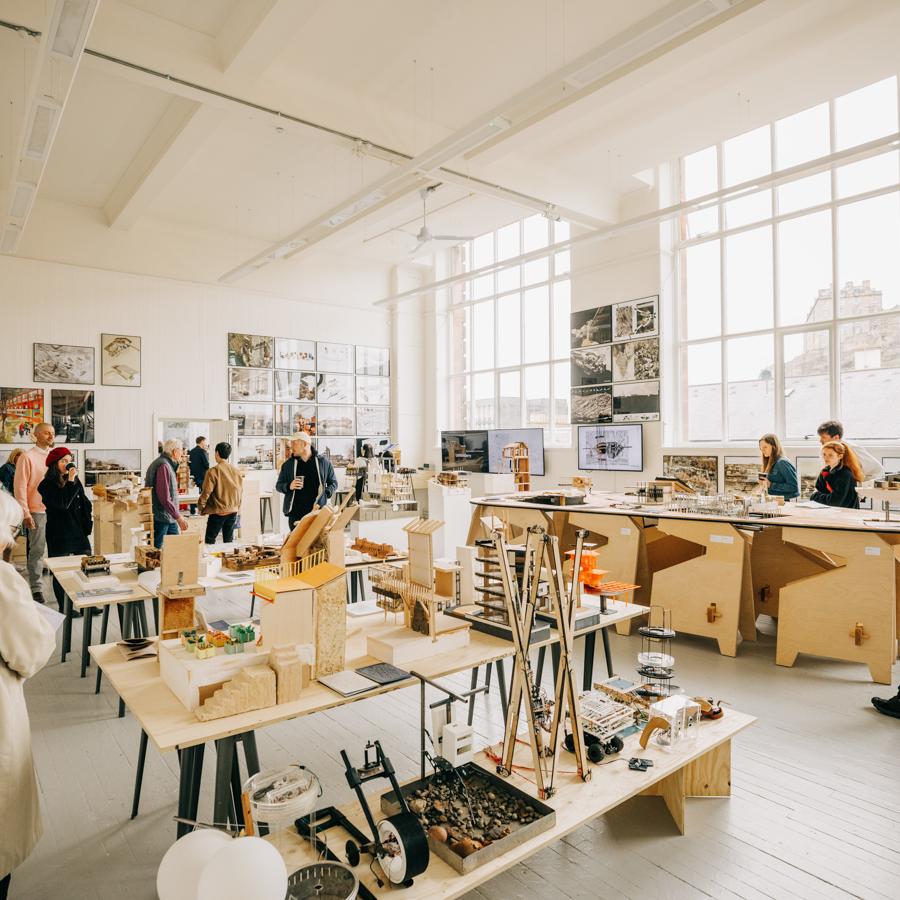
In an architectural design studio students begin with the site and its possibilities, using drawing to survey, record, scrutinise and imagine. Teaching in close collaboration with my architect colleagues I seek ways to instil the protocols of drawing out and working through, of repetition, trace, overdrawing, observation and abstraction to the point of architectural invention.
How does it feel to have won a prestigious award?
It is overwhelming.
Art is a quiet profession most often undertaken in small white rooms with nobody watching. This is a situation that is both welcome and necessary.
Moments of acknowledgement, when the work is seen in public, are essential. Occasions like this, like the Derwent Art Prize, are rare and wonderful. The unspoken narrative of years is focused on a single image which is seen and understood.
You can find out more about the 2026 Derwent Art Prize on their website.