Dr Simone Ferracina
Job title:
Senior Lecturer in Architectural Ecologies
Office:
Minto House, Room 4.19a
Research Output:
Edinburgh Research Explorer linkBiography
Dr Simone Ferracina is a writer, educator, the founding director of Exaptive Design Office (EDO), and a Senior Lecturer in Architectural Ecologies at the Edinburgh School of Architecture and Landscape Architecture (ESALA), the University of Edinburgh. His research and teaching investigate the technical infrastructures, theories, and methodological approaches required to move architectural discourse and practice beyond extraction, ecocide, and environmental injustice; and to challenge narrow disciplinary and economic understandings of authorship, habitation, use, and value. He is interested in the conceptualisation, production, storage, and circulation of building materials, with a particular focus on reuse, repurposing, supply chains, and latent effects.
His monograph Ecologies of Inception: Design Potentials on a Warming Planet (Routledge 2022), of which a second edition is forthcoming in 2027, begins from the tabula rasa as a figure of potentiality to develop a philosophy of design grounded on acts of reclamation and care. Other recent publications include the co-edited Architecture in Polluted Worlds: Dirt as Method, Pedagogy and Practice (forthcoming in 2027), as well as several chapters: "Theriomorphing: Design and Life-Worlds" in Art, Design, and Animal Studies (Routledge 2027); "Synchronous and Diachronic Objects: An Experimental Method" in Handbook of Experimental Architecture (Routledge 2027); "Dirty Pedagogies: A Conversation" in Situated Ecologies of Care (Routledge 2026) and "Reclaiming Opacity: Toward Errant, Exaptive, and Monstrous Architectural Ecologies" in An Orobic Journey: On Migratory Restlessness, Community, and Multispecies Geographies (Lenz 2026). Recent online essays are "Dispositions, Affordances and Being Otherwise" (Berliner Gazette 2024) and "The Ethics of Use: Repurposing Debenhams" (e-flux Architecture 2023). His projects and writing have been published in Volume; 306090; Thresholds; Kerb; Continent; Palgrave Communications; The Architectural Review; Inflexions: A Journal of Research Creation; Architecture Design Theory (Ardeth); Khorein: Journal of Architecture and Philosophy; Landscape Research; and Vesper: Journal of Architecture, Arts, and Theory; among others. He has peer-reviewed papers for Architecture and Culture; Open Philosophy; Drawing Matter Journal; She Ji: The Journal of Design, Economics and Innovation; the Journal of Chinese Architecture and Urbanism; Edinburgh Architecture Research (EAR); Architecture Design Theory (Ardeth); Field; Architecture; Architectural Theory Review; Diseña, and The Journal of Architecture.
Simone holds a Diploma of Architect (USI AAM 2003) and a PhD in Philosophy, Art & Critical Thought (EGS 2020). His work has been exhibited and presented internationally, including at the Design Council’s Design for Planet Festival, the V&A, the Greenhouse Center for Environmental Humanities, the Low Carbon Design Institute, Genova BeDesign Week, the Venice Art Biennale, NYU Gallatin, the Trondheim Biennale, and the Tallinn Architecture Biennale.
At ESALA, he has been the Programme Director for the Master of Architecture (2023-26), and the co-convenor of ESALA Climate Action, a student and staff group aiming to promote dynamic responses to the climate emergency in the School’s pedagogies, operations, research, and community practices (2020-24). Prior to joining ESALA, he was a researcher in Living Architecture at Newcastle University and, for over a decade, a project manager and project architect at Richard Meier & Partners Architects in New York City, with award-winning projects in Italy, Czech Republic, and Taiwan.
Simone is currently an External Examiner at the London School of Architecture (MArch Designing Architecture) and at Newcastle University (BA Architecture + Master of Architecture and Urban Planning), and serves often as a jury member for the Master of Architecture at KU Leuven.
Research interests
- Non-extractive and 'dirty' design theories, methods, and pedagogies
- Regenerative architecture, materials, and the circular economy
- Reuse, repurposing and experimental construction assemblies
- Exaptive, pluriversal and multispecies design
- Waste, discard and production studies
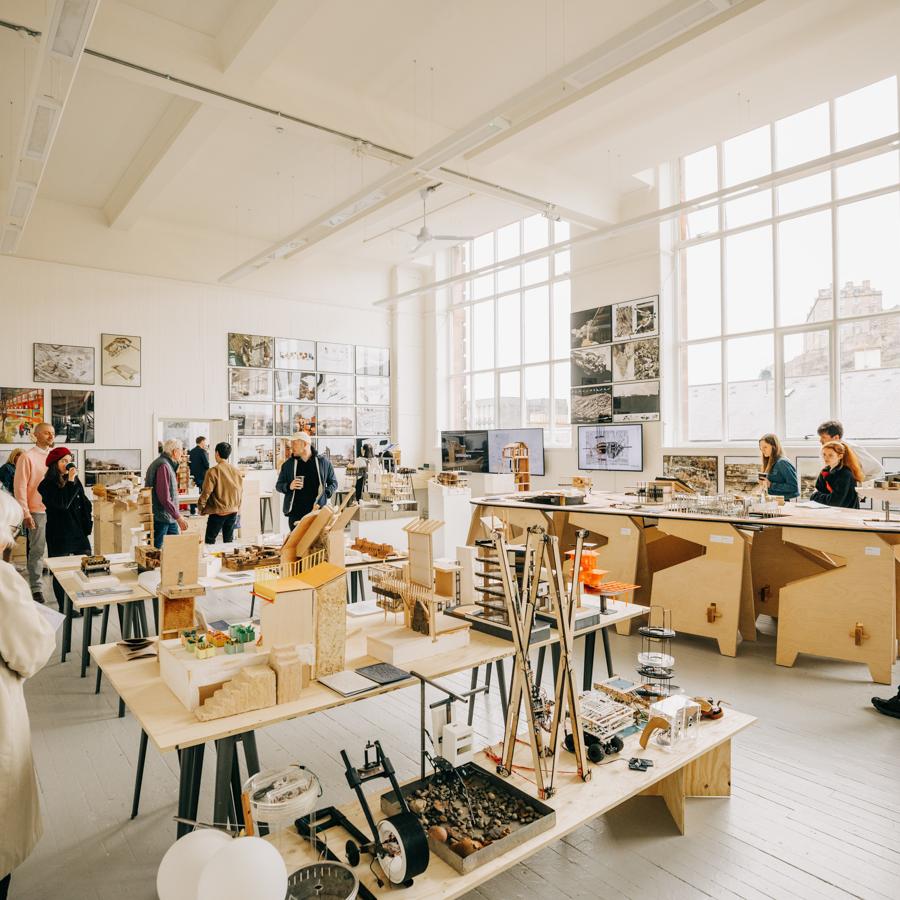
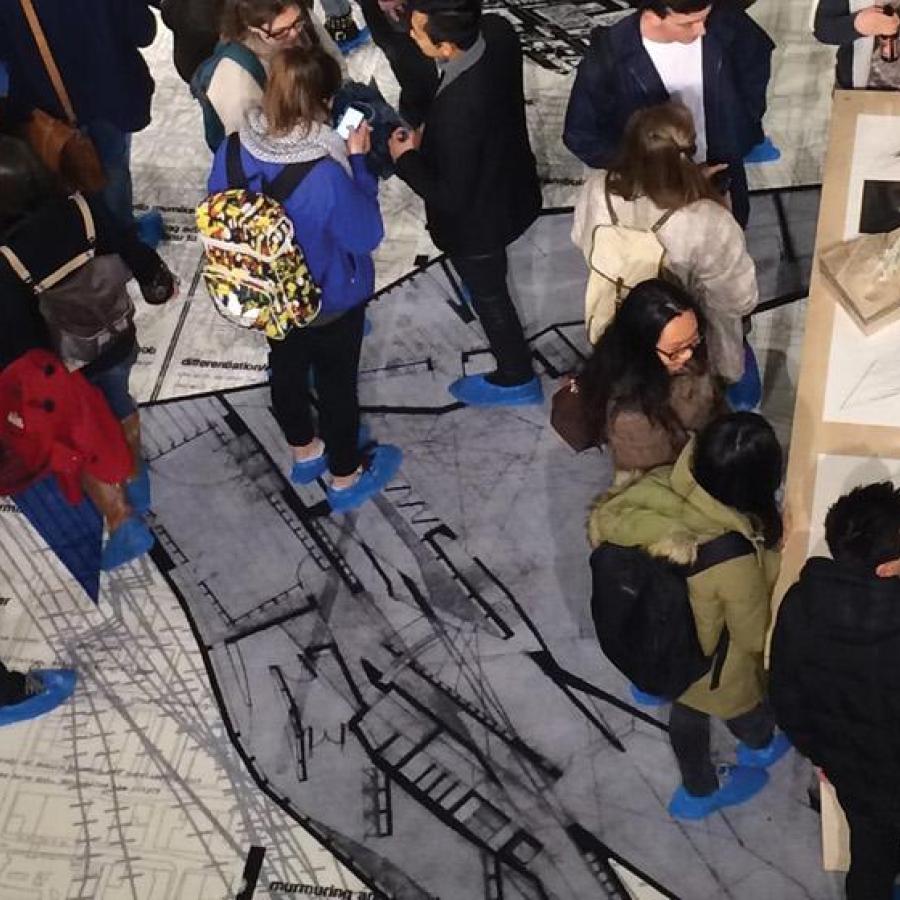
Simone supervises PhD, MScR and Architecture Dissertation (ARJA10002) students and teaches design studios at UG and PG levels. He leads the Radical Harvest unit, which promotes reuse and repurposing as forms of architectural attention and care; as modes of encountering, reimagining and revaluing that which already exists; as ways to engage with the spatial and temporal specificity of sites, materials, and communities; and as tools for prototyping new design practices, methods, and assemblies. Recognising the political nature—and often violent effects—of design decisions, and their vast contributions to environmental injustice and climatic collapse, the studio aims to explore, learn about, envision, and prototype novel forms of inclusive, bioregional, and low-carbon architecture for the 21st century. The Edinburgh University Students’ Association (EUSA) has granted the Outstanding Course Award 2024 to Radical Harvest, also shortlisting Simone for the Outstanding Commitment to Social Justice and Sustainability award, and long listing him in the Teacher of the Year (CAHSS) category. Simone was also shortlisted for the 2026 RIAS Scottish Design Tutor Award.
From 2018 to 2023, Simone was Course Organiser for Architectural Design 3: Explorations (ARCH10001), also co-leading a studio in Architectural Design 4: Tectonics (ARCH10003) and contributing lectures for theory courses in architecture (Architectural Theory, ARCH10002) and landscape architecture (Situating Landscape Architectural Theory, ARCH11272). During this time, he also contributed to the Academic Portfolio course (ARCH10005). From 2023 until 2026, while serving as Director of the Master of Architecture programme, he was the Course Organiser for the Modular Studio Pathway (Architectural Design Studio C, ARCH1108; Architectural Design Studio D, ARCH11090; Architectural Design Studio B, ARCH11096; and Architectural Design Studio G, ARJA11003) and for the Integrated Studio Pathway (Architectural Design Studio C, ARCH11091; Architectural Design Studio D, ARCH11092; Architectural Design Studio A, 11093; and Architectural Design Studio H, ARCH11174). He was also a Cohort Lead, and the Course Organiser for Design Report (ARCH11069) and Academic Portfolio 2 (ARJA11001). Alongside colleagues at ESALA and ECA, in 2025 Simone successfully led the MArch transition to the new ARB Competency Outcomes system.
Research
Research
Simone’s research, articulated through writing, teaching, and architectural practice, investigates the technical infrastructures, theories, and methodological approaches required to move architectural discourse and practice beyond extraction, ecocide, and environmental injustice; and to challenge narrow disciplinary and economic understandings of authorship, habitation, use, and value. He is interested in the conceptualisation, production, and circulation of building materials, with a particular focus on reuse and repurposing.
His monograph Ecologies of inception: Design Potentials on a Warming Planet (Routledge 2022) problematizes the still-prevailing modern paradigm of design practice: the technical tabula rasa, a tendency to begin from scratch and use raw, amorphous, and obedient materials. Instead, the philosophy of design developed in the text prompts—through a variety of case studies, thinkers, and disciplines—a collective reconsideration of value, dissociating it from the projects and signatures of any one author or generation. As an alternative, the book introduces a nodal and exaptive paradigm for design: a conceptual and methodological toolset for engaging the durational and anthropocenic materiality of the third millennium, and for radically prioritizing practices of maintenance, reuse, care, and co-option. This approach, which is inspired by (and builds upon) evolutionary biology, technological disobedience, queer use, adaptive reuse, experimental preservation, and improvisational practices such as collage, adhocism, bricolage, and kit-bashing, refuses to reduce pre-existing material substrates to abstract lists of properties or featureless lumps, encountering them on their own terms—as situated individuals and co-authors.
Simone is currently working on three separate but interrelated topics: storage, dispositions and supply chains, as well as collaborating with radical architect Alessandro Poli on a book that will revisit and critically assess the project Zeno, a Self-Sufficient Culture, which Poli first developed between 1972 and 1980 in the context of the research on Extra-Urban Material Culture at the Faculty of Architecture in Florence, and which he first exhibited with Superstudio at the 1978 Venice Biennale.
Current PhD students
Sinéad Kempley
Fictioning waste and wasting: thinking through deceleration and dead ends in mythopoetic installation and moving image
Gang Pan
Architecture of Interactive Moving Images: Videogame Spatial Cinematics
PhD Supervision Topics
- Deconstruction and the circulation of reclaimed building materials
- Reuse, repurposing and experimental construction assemblies
- Waste, discard and production studies
- Regenerative architecture, materials, and the circular economy
- Critical approaches to design, use, authorship, and the associated theories and methodologies
- Exaptive, pluriversal and multispecies design