

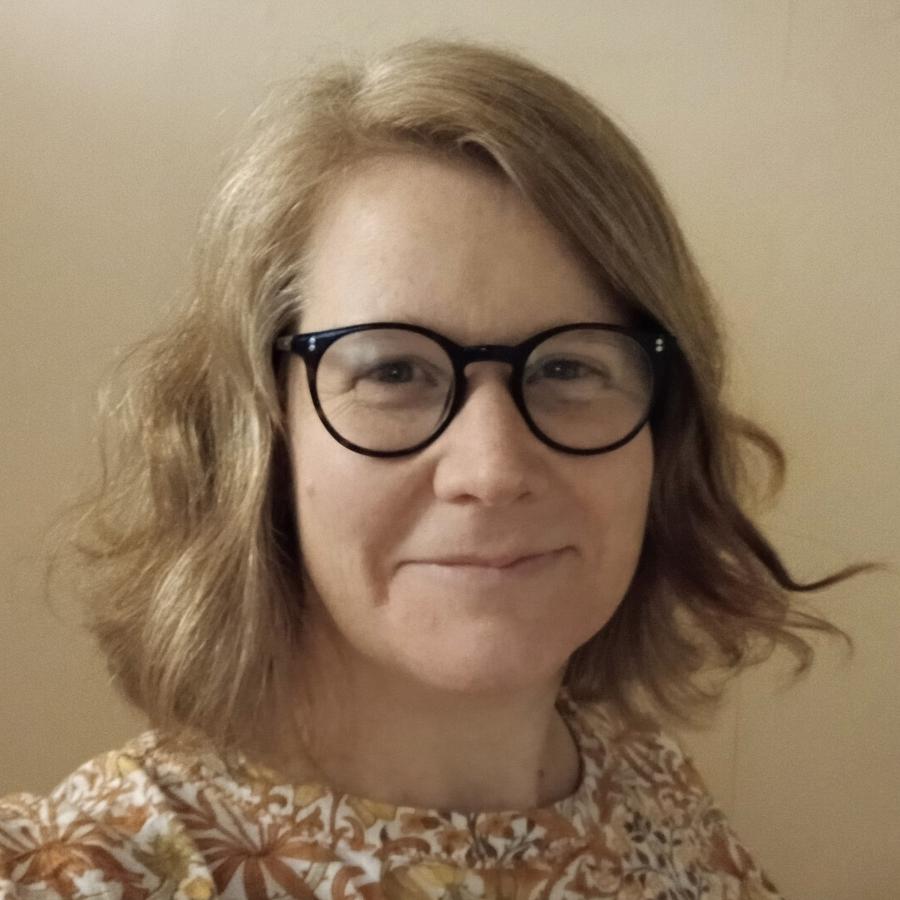
Dr Michelle Bastian
Job title:
Senior Lecturer in Environmental Humanities
Office:
Level 1, Room 303B The Maltings, Minto House
Office hours:
In Semester One 2026, I am available on Wednesdays 11am-1pm for ad hoc meetings. Please contact me to book a slot.
Research Output:
Edinburgh Research Explorer linkBiography
Michelle Bastian works in the areas of critical time studies and environmental humanities, with a broad focus on the role of time in social processes of inclusion and exclusion. Currently her work is focused on time-keeping practices in a context of climate crisis, and developing humanities approaches to phenology, the scientific study of life-cycle timing in plants, animals and environments. She was an Associate Professor II at the University of Oslo with the Oslo School of Environmental Humanities from 2021-2024, and in 2021-2022 was a Mid-Career Fellow supported by the Independent Social Research Foundation.
She completed her PhD in Philosophy at the University of New South Wales, and was a Research Associate at the ESRC Centre for Research on Socio-Cultural Change, University of Manchester, before taking up her current role in Edinburgh.
Since 2013 she has been involved in a wide range of funded research projects, as principle and co-investigator. These including projects looking at time and community, local food projects, sustainable economies, temporal design, transition towns and participatory research in more-than-human worlds. Her most recent project is part of British Academy's Global Convening Programme: The Time(s) of a Just Transition.
Her work has been published in a range of journals including Environment and Planning E: Nature and Space, Environmental Humanities, GeoHumanities, Parallax, Theory, Culture and Society, and New Formations.
Michelle is an editor of five collections including; Teaching Time (Time & Society, 2023); The Social Life of Time (Time & Society, 2020); Field Philosophy and Other Experiments (Parallax, 2019; republished in book form with Routledge in 2021) and Participatory Research in More-than-Human Worlds (Routledge, 2016). She was the Editor in Chief for the journal Time & Society (SAGE) from 2019-2025, and continues as Consulting Editor.
Michelle is the founder and convenor of the Temporal Belongings Network, co-convenor of the Edinburgh Environmental Humanities Network (and the associated PhD Lab), member of the Extincion Studies Working Group and co-founder of the Transition Research Network which she co-cordinated from 2011-2017.
Current PhD Students (in addition to those listed below):
- Adam Frank (Philosophy, U of Dundee) Living Attentively Amidst Biodiversity Loss: An Exploration of Description and Normativity in Vinciane Despret's Philosophical Ethology. Supported by a Carnegie PhD Scholarship
Links:
Research interests
- Environmental Humanities
- Time Studies
- Clock and non-clock timekeeping
- Extinction and multispecies studies
- Ecological and geological approaches to time
Michelle contributes to a range of programmes within ESALA, teaching courses focused on theory, environmental humanities, time studies, and more-than-human methods, as well as acting as a dissertation supervisor for final year projects. She also acts as mentor for the Edinburgh Environmental Humanities Network PhD Lab.
Research
Research
My research focuses on two main areas:
1. Philosophy of social time and social aspects of time-keeping
My work seeks to open up new interdisciplinary conversations between philosophy, the social sciences and design. Building on my training in feminist, environmental and continental philosophy, my research has drawn on social scientific work on social time to rethink key philosophical questions around the politics of time and the construction of communities. These approaches often challenge the way that time, and time-reckoning tools, have been treated by philosophers. I also explore new avenues for philosophical enquiry, including engagements with designers and field-based research approaches.
2. Concepts and methods for supporting more-than-human communities
Extending my work on the relationship between time and communities to the issue of more-than-human communities, I seek to bring critical time studies into conversation with environmental humanities to explore how social concepts of time are involved in the construction of nature as outside of culture and everyday human concerns. In particular I have argued for expanding the scope of relationships we look to when ‘telling time’. A further key aspect of this work has been again to facilitate interdisciplinary dialogues, including my work on more-than-human participatory research, which brings human-focused participatory research methods into conversation with multi-species research methods. More recently, I have been funded by the ISRF to collaborate across phenology (the scientific study of life-cycle timing in plants and animals) and environmental humanities.
Current PhD students
Andrew (Andy) Marks
Challenging enclosure: how can commoning landscapes support queer ecologies?
Annie Gallagher
Towards Building Dùthchas: Embodied Landscape Conservation Volunteering in the Cairngorms
Irene Aldazabal
Polyphonic assemblages in living sculptures: An interdisciplinary and interspecies study of circadian rhythms
PhD Supervision Topics
- Time, temporality, critical time studies
- Environmental Humanities

